Vol 13 Issue 33 ~ Editor: Rev. Fr. Courtney Edward KrierAugust 15, 2020 ~ The Assumption of the Blessed Virgin Mary
1. What is the Holy Eucharist
2. Eleventh Sunday after Pentecost
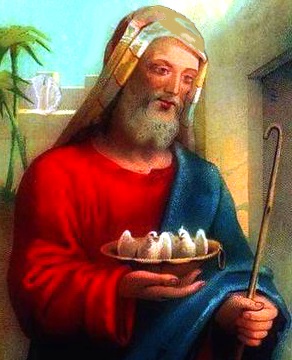
3. Saint Joachim
4. Family and Marriage
5. Articles and notices
Dear Reader:
Today being the Feast of the Assumption of Mary into Heaven, it is only proper to present a few reflections on the Feast.
On May 1, 1946, Pope Pius XII asked the Bishops throughout the Catholic world: Do you, venerable brethren, in your outstanding wisdom and prudence, judge that the bodily Assumption of the Blessed Virgin can be proposed and defined as a dogma of faith? Do you, with your clergy and people, desire it? The response by the bishops was almost unanimous that all Catholics would want the Assumption of the Blessed Virgin Mary declared a dogma, a divinely revealed doctrine of the Church. Therefore, Pope Pius XII chose November 1, 1950, to proclaim the dogma. This was not without prayer and preparation. The Year 1950 was already proclaimed to be a Marian Year. On October 30, Pius XII once more asked the Cardinals, bishops and prelates in Rome present for the occasion during a consistory: Do you, Venerable Brothers, agree that the bodily assumption of the Blessed Virgin Mary ought to be announced and declared as a dogma revealed by God? The response was a unanimous yes. On October 31, the Pope carried the image of Mary, Salus Populi Romani (or the more older title, Regina Coeli,) in solemn procession from Saint Mary Major to Saint Peter’s. On November 1, with the bells of Rome ringing, Pope Pius XII proclaimed: We declare and define this to be a dogma revealed by God, that the immaculate Mother of God, the ever virgin Mary, was, after the close of her life on earth, taken up into the glory of heaven with body and soul. He set forth the teaching of the Assumption of the Blessed Virgin Mary in His Apostolic Constitution, Munificentissimus Deus, of the same day:
. . . since the liturgy of the Church does not engender the Catholic faith, but rather springs from it, in such a way that the practices of the sacred worship proceed from the faith as the fruit comes from the tree, it follows that the holy Fathers and the great Doctors, in the homilies and sermons they gave the people on this feast day, did not draw their teaching from the feast itself as from a primary source, but rather they spoke of this doctrine as something already known and accepted by Christ’s faithful. They presented it more clearly. They offered more profound explanations of its meaning and nature, bringing out into sharper light the fact that this feast shows, not only that the dead body of the Blessed Virgin Mary remained incorrupt, but that she gained a triumph out of death, her heavenly glorification after the example of her only begotten Son, Jesus Christ—truths that the liturgical books had frequently touched upon concisely and briefly.
Thus St. John Damascene, an outstanding herald of this traditional truth, spoke out with powerful eloquence when he compared the bodily Assumption of the loving Mother of God with her other prerogatives and privileges. “It was fitting that she, who had kept her virginity intact in childbirth, should keep her own body free from all corruption even after death. It was fitting that she, who had carried the Creator as a child at her breast, should dwell in the divine tabernacles. It was fitting that the spouse, whom the Father had taken to himself, should live in the divine mansions. It was fitting that she, who had seen her Son upon the cross and who had thereby received into her heart the sword of sorrow which she had escaped in the act of giving birth to him, should look upon him as he sits with the Father. It was fitting that God’s Mother should possess what belongs to her Son, and that she should be honored by every creature as the Mother and as the handmaid of God.”[ St. John Damascene, Encomium in Dormitionem Dei Genetricis Semperque Virginis Mariae, Hom. II, n. 14; cf. also ibid, n. 3.]
. . . . We must remember especially that, since the second century, the Virgin Mary has been designated by the holy Fathers as the new Eve, who, although subject to the new Adam, is most intimately associated with him in that struggle against the infernal foe which, as foretold in the protoevangelium, [Gn 3:15.] would finally result in that most complete victory over the sin and death which are always mentioned together in the writings of the Apostle of the Gentiles. [Rm 5-6; I Cor. 15:21-26, 54-57.] Consequently, just as the glorious resurrection of Christ was an essential part and the final sign of this victory, so that struggle which was common to the Blessed Virgin and her divine Son should be brought to a close by the glorification of her virginal body, for the same Apostle says: “When this mortal thing hath put on immortality, then shall come to pass the saying that is written: Death is swallowed up in victory.”[I Cor 15:54.]
Hence the revered Mother of God, from all eternity joined in a hidden way with Jesus Christ in one and the same decree of predestination, [The Bull Ineffabilis Deus.] immaculate in her conception, a most perfect virgin in her divine motherhood, the noble associate of the divine Redeemer who has won a complete triumph over sin and its consequences, finally obtained, as the supreme culmination of her privileges, that she should be preserved free from the corruption of the tomb and that, like her own Son, having overcome death, she might be taken up body and soul to the glory of heaven where, as Queen, she sits in splendor at the right hand of her Son, the immortal King of the Ages. [I Tm 1:17.]
. . . . For which reason . . . . we pronounce, declare, and define it to be a divinely revealed dogma: that the Immaculate Mother of God, the ever Virgin Mary, having completed the course of her earthly life, was assumed body and soul into heavenly glory.
As always, enjoy the readings provided for your benefit.—The Editor
________________
WHAT IS THE HOLY EUCHARIST
By Rev. Courtney Edward Krier
Part III
The Real Presence
As the Real Presence was never extensively denied, the only reference being Ignatius of Antioch when speaking of the Docetists, From Eucharist and prayer they hold aloof, because they do not confess that the Eucharist is the Flesh of our Savior Jesus Christ, (cf. Smyrnaeans, 7), the Councils addressed those errors that were dividing the Church: Divinity of Jesus Christ, Trinity, and Mary as Mother of God. The Council of Nicea (325) took up Baptism (one baptism for the remission of sins—no re-baptism) in opposition to the Donatists. The Council of Chalcedon (451) did include a section on The Ordination of the Clergy, which contains the following regulation:
Can. 6 (94). When an acolyte is ordained, let him indeed be taught by the bishop how he ought to conduct himself in his office; let him receive from the archdeacon the candlestick with the wax tapers, so that he may know that he is about to be given the right to kindle the lights of the church. Let him also receive the empty cruet for carrying the wine at the Eucharist of the blood of Christ. (From “Ancient Statutes of the Church,” or “Ancient Statutes of the East”; cf. DB 154.)
The discipline of the secret (Disciplina arcani) was very rigid. The Mysteries (i.e., the Sacraments) were not delivered (taught) at all to those not baptized, and therefore they were not initiated into the mysteries (that is, instructed about the Sacraments). Once the catechumens (those receiving instruction in the Catholic faith) were recommended to be baptized, they were initiated into each sacrament (Mystery) that they received: Baptism, Confirmation and Holy Eucharist (Mass of the Faithful) and then allowed to fully participate in the Church. When one reads the Apostolic Fathers one must then take into consideration this Discipline of the Secret (remembering discipline means teaching and secret refers to the mysteries or Sacraments). Arthur Barnes, in the Catholic Encyclopedia, writes under the article Discipline of the Secret the following:
The origin of the custom must be looked for in the recorded words of Christ: “Give not that which is holy to dogs; neither cast your pearls before swine; lest perhaps they trample them under their feet, and turning upon you, they tear you” (Matthew 7:6), while the practice in Apostolic times is sufficiently vouched for by St. Paul’s assurance that he fed the Corinthians “as . . . little ones in Christ”, giving them “milk to drink, not meat”, because they were not yet able to bear it (1 Corinthians 3:1-2). With this passage we may compare also Hebrews 5:12-14, where the same illustration is used, and it is declared that “solid food is for the perfect; for them who by custom have their senses exercised to the discerning of good and evil.”
The monuments of the earliest centuries afford interesting examples of the principle of the Discipline of the Secret. Monuments which could be seen by all could only speak of the mysteries of religion under veiled symbols. So in the catacombs there is scarcely any instance of a painting the subject of which is directly Christian, although all spoke of Christian truth to those who were instructed in their meaning. Jewish subjects typical of Christian truths were commonly chosen, while the representation of Christ under the name and form of a fish made the allusion to the doctrine of the Holy Eucharist possible and plain. There is, for example, the famous Autun inscription: “Take the food, honey-sweet, of the redeemer of the saints, eat and drink holding the Fish in they hands”; words which every Christian would understand at once, but which conveyed nothing to the uninitiated. . . .
The Mass of the Catechumens is a reminder of the exclusion of the non-baptized in participating in the Holy Eucharist. Augustine comments on the words of Christ to Nicodemus:
Behold, they already believed on Jesus, and yet Jesus did not trust Himself to them. Why? Because they were not yet born again of water and of the Spirit. From this have we exhorted and do exhort our brethren the catechumens. For if you ask them, they have already believed in Jesus; but because they have not yet received His flesh and blood, Jesus has not yet trusted Himself to them. What must they do that Jesus may trust Himself to them? They must be born again of water and of the Spirit; the Church that is in travail with them must bring them forth. (Tractate 9 on John, 3.)
The early formulas for the Liturgy of the Mass included an invocation in semblance that as the Son of God became Incarnate in womb of Mary by the power of the Holy Ghost, so the bread and wine became the Body and Blood of the Incarnate Word. Here it is mentioned only as supporting the belief in the Real Presence. So Ott states:
The Fathers’ testimony is reinforced by the testimony of the ancient Christian Liturgies, in which the so-called Epiclesis [Invocation] of the Logos is called down, “So that He might make the bread into the Body of Christ, and the wine into the blood of Christ” (St. Cyril of Jerusalem, Cat. Myst. 5, 7; Cf. the Euchologion of Serapion of Thmuis 13, 4; Apost. Const. VIII 12, 39). (III, I, cap. 1, 4, p. 378.)
And Fortescue writes:
It is certain that all the old liturgies contained such a prayer. For instance, the Liturgy of the Apostolic Constitutions, immediately after the recital of the words of Institution, goes on to the Anamnesis — “Remembering therefore His Passion . . .” — in which occur the words: “thou, the God who lackest nothing, being pleased with them (the Offerings) for the honour of Thy Christ, and sending down Thy Holy Spirit on this sacrifice, the witness of the Passion of the Lord Jesus, to manifest this bread as the Body of Thy Christ and this chalice as the Blood of Thy Christ. . .” (Brightman, Liturgies Eastern and Western, I, 21). So the Greek and Syrian Liturgies of St. James (ibid., 54, 88-89), the Alexandrine Liturgies (ibid., 134, 179), the Abyssinian Rite (ibid., 233), those of the Nestorians (ibid., 287) and Armenians (ibid., 439). The Epiklesis in the Byzantine Liturgy of St. John Chrysostom is said thus: “We offer to Thee this reasonable and unbloody sacrifice; and we beg Thee, we ask Thee, we pray Thee that Thou, sending down Thy Holy Spirit on us and on these present gifts” . . . “make this bread into the Precious Body of Thy Christ . . . “and that which is in this chalice, the Precious Blood of Thy Christ”. . . , “changing [μεταβαλλειν] them by Thy Holy Spirit” (Brightman, op. cit., I 386-387).—(Article Epiklesis, CE)
Therefore, the claim by the schismatic Orthodox that the Epiclesis being what confects the change of bread and wine into the Body and Blood of Christ, not the words of Christ in the Consecration, confirms the belief in the Real Presence had never been disputed nor could it be a doctrine newly introduced as the dispute would not be by them when, but that the change of bread and wine into the Body and Blood of Christ does or does not happen.
In conclusion, there is a solid belief that in the Sacrament of the Holy Eucharist there are truly, really, and substantially contained the body and blood together with the soul and divinity of our Lord Jesus Christ, and therefore the whole Christ. (Council of Trent, Sess. XIII, can. 1; cf. DB 883.)
————————–
The Sunday Sermons of the Great Fathers
M. F. Toal
THE GOSPEL OF THE SUNDAY
MARK vii. 31-37
At that time: Jesus going out of the coasts of Tyre, he came by Sidon to the sea of Galilee, through the midst of the coasts of Decapolis. And they bring to him one deaf and dumb; and they besought him that he would lay his hand upon him. And, taking him from the multitude apart, he put his fingers into his ears: and spitting, he touched his tongue. And, looking up to heaven, he groaned and said to him: Ephpheta, which is, Be thou opened. And immediately his ears were opened and the string of his tongue was loosed and he spoke right. And he charged them that they should tell no man. But the more he charged them, so much the more a great deal did they publish it. And so much the more did they wonder, saying: He hath done all dungs well: He hath made the deaf to hear, and the dumb to speak.
EXPOSITION FROM THE CATENA AUREA
V. 31. And going out of the coasts of Tyre he came . . .
THEOPHYLACTUS: The Lord willed not to stay in the midst of Gentiles, so as to give no grounds to the Jews to point Him out as a transgressor of the Law, by seeking the company of the Gentiles; and so He immediately returns. Hence it is said that, he came by Sidon to the sea of Galilee through the midst of the coasts of the Decapolis.
BEDE: The Decapolis was a region of ten cities to the east of the Jordan and opposite Galilee. That it is said that the Lord came by Sidon to the sea of Galilee, through the coasts of the Decapolis does not mean He entered the territory of the Decapolis; nor is He said to cross the sea, but rather that He came as far as the sea coast, to a point opposite the centre of the Decapolis; which lay some distance eastwards from the sea. Then follows:
V. 32. And they bring to him one deaf and dumb . . .
THEOPHYLACTUS: This is rightly introduced following the deliverance of one possessed by a demon; for this affliction was due to a devil.
V. 33. And taking him from the multitude apart, he put . . .
PSEUDO-CHRYSOSTOM (Victor of Antioch): He takes the deaf and dumb person brought to Him, apart from the multitude, not to perform His divine wonders openly; teaching us to put away vain glory and pride: for there is nothing through which a man works wonders more than by giving himself to humility and observing modesty. He put his fingers into his ears Who could heal by a word; to show that the Body united to His Divinity, and to Its Operation, was endowed with the Divine power. Because of the sin of Adam, human nature had suffered much, and had been wounded in its senses and in its members. But Christ coming into the world revealed to us, in Himself, the perfection of human nature; and for this reason He opened the ears with His fingers, and gave speech by the moisture of His tongue. And so we read: He put his fingers into his ears, and spitting, he touched his tongue.
THEOPHYLACTUS: That He might show us that divine and holy are all the members of His sacred Body; and the saliva that undid the string of his tongue. For though saliva is but superfluous moisture, in the Lord all that is His is divine.
V.34. And, looking up to heaven, he groaned and said to him: Ephpheta, which is, Be thou opened.
BEDE: He looked up to heaven to teach us that it is from there the dumb must seek speech, the deaf hearing, and all who suffer healing. He groaned, not because He needed to seek with groaning anything from the Father (He Who together with the Father bestows all things on those who seek from Him), but that He might give us an example of groaning, when we must call upon the assistance of the heavenly mercy, in our own or in our neighbour’s miseries.
PSEUDO-CHRYSOSTOM (as above): He also groaned as taking our cause upon Himself; and as having compassion on human nature: seeing the misery into which humanity had fallen.
BEDE: That He says, Ephpheta, which means: Be thou opened, refers strictly to the ears; for ears must be opened to hear, but the tongue, that it may speak, must be loosed from the bond of its own tardiness. Hence:
V.35. And immediately his ears were opened and the string of his tongue was loosed and he spoke right.
Wherein both natures of the one and the same Christ are clearly distinguished. Looking up to heaven He groans, as a man praying to God; then, as mighty with the power of God, with a single word, He heals. Then follows:
V.36. And he charged them that they should tell no man . . .
JEROME: In which He teaches us not to glory in our strength, but in the Cross and in humiliation. PSEUDO-CHRYSOSTOM: He also told them to keep the miracle secret, lest the Jews through envy should put Him to death before due time.
JEROME: But a city set on a hill, and seen from all sides, cannot be hid; and humility ever precedes glory. So we read: But the more he charged them, so much the more a great deal did they publish it.
THEOPHYLACTUS: In this we are taught that when we give anything to another, we should not look for praise and recognition. But when we receive favours, we ought to praise and proclaim our benefactors, even though they may not wish it.
AUGUSTINE, HARMONY OF THE GOSPELS, IV, 4: But if He (as knowing the present and the future minds of men) was aware that the more He charged them not to publish it, so much the more would they publish it, why then did He forbid them, if not to make clear to the sluggish how much more joyfully, more fervently, they should proclaim Him whom He commands to make Him known, when they would not keep silent whom He forbade to speak? GLOSS: Because of the praise of those whom Christ healed, the wonder of the multitude and their making known of Christ’s favours increased.
V.37. And so much the more did they wonder, saying: He hath done all things well; that is: He hath both made the deaf to hear and the dumb to speak.
JEROME: Tyre is mystically interpreted as ‘narrowness’, and symbolizes Judea; to whom the Lord said: For the bed is straitened (Is. xxviii. 20), and from whom He turns away to other peoples. Sidon means ‘hunting’. For an untamed beast is our generation; and the sea stands for our stormy inconstancy. The Saviour comes to save the Gentiles in the midst of the Decapolis; which is interpreted as signifying the commandments of the Decalogue. And the human race, throughout its many members, is reckoned as one man, devoured in the First Man by varying afflictions: it is blinded when it sees evil, deaf when it hears it, dumb when it speaks it. And they beseech Him, to lay his hand upon him: for many Patriarchs and just men hoped and longed for the coming of the Lord Incarnate.
BEDE: Or, he is deaf and dumb who has neither ears for the word of God, nor opens his mouth to speak it. It is necessary that those who have now learned both to hear and to speak the words of God, should offer such as these to the Lord, that He may heal them.
JEROME: He who is deserving of healing is ever led apart from restless thoughts, from unruly actions, from disordered speech. The fingers put in his ears are the words or the gifts of the Spirit; of Whom it is said: He is the finger of God (Exod. viii. 19). The spittle is the divine wisdom, which unties the bond on the lips of man, so that he may say: I believe in God, the Father Almighty, and all the rest. Looking up to heaven He groaned, that is, He taught us to groan, and to uplift to heaven the treasures of our heart: for by the groans of our compunction the empty joy of the flesh is purified, and our ears are opened to the sound of hymns, to canticles, to the psalms. He loosens our tongue, that it may bring forth the good word; which not even blows can silence.
———————–
AUGUST 16
St. Joachim, Father of Our Lady, Confessor
1. No mention is made in Scripture of St. Anne’s husband the father of the Blessed Virgin. According to apocryphal writings Joachim was excluded from the privilege of offering sacrifice in Jerusalem, because he was childless. He therefore went to live with shepherds in the desert and there received various revelations from God. He was a man of deep piety and charity. It was only after twenty years that a daughter was born to him and Anne in Jerusalem or Nazareth. The Greeks celebrated his feast in the early centuries; the West began to do so only in the fifteenth century. It was formerly on the Sunday after the Assumption, but Pope St. Pius X transferred it to August 16.
2. “God who… didst choose blessed Joachim to be the father of her who bore thy Son…” (Collect). The choice of Joachim is divine assurance of his excellence, for, humanly speaking, the fruit is the proof of the tree: the immaculate conception of the future mother of God places the unmistakable stamp of holiness on the marriage of Joachim and Anne. St. John of Damascus said: “By the fruit of your body are you known. You lived a pious, holy life and gave life to a daughter who is more exalted than the angels; indeed, she is mistress of the angels. Joachim cultivated the interior life and meditated on the holy word. He nourished his soul with the refreshing waters of divine grace; in this manner, he turned his mind completely away from things that were not permitted, and directed it in the path of holiness.” It was not sufficient that Joachim be the husband of the Virgin’s saintly mother; in order to be worthy of the distinction of such fatherhood he had to be holy himself. If his dignity as father of the Mother of God was great and unique, so also were his virtues.
“O Joachim, husband of St. Anne, the gentle Virgin’s father, bring thy saving help to all God’s household” (Alleluia verse). Of his traditional charity the liturgy says: “Rich were his alms to the needy; still, through the years, his good name abides in memory: the Lord will lift up his head in triumph” (Introit). As Joachim was generous to the poor on earth, so now in heaven he distributes spiritual favors to us all. Our certainty of this prompts us to ask his help in obtaining the gift of salvation. He gave us Mary, Mother of the Redeemer from whom all salvation must come. His privilege as father of Our Lady gives him a special task in the Church with regard to those redeemed by Christ. Him “his master entrusted with the care of his household to give them their allowance of food at the appointed time” (Communion). We claim a special right to his intercession with God for the grace we need. This flows logically from the consideration that his blood-relationship with Mary and Jesus places him closer to God than any other saint, except Anne and Mary.
3. “Thou hast crowned him with glory and honor, bidding him, Lord, rule over the work of thy hands” (Offertory). St. Joachim rules over Mary and over Him whom Mary brought forth for our redemption.
“O Joachim, husband of St. Anne, the gentle Virgin’s father, bring thy saving help to all God’s household.” (Alleluia verse).
Collect: God, who out of all Thy saints didst choose blessed Joachim to be the father of who bore Thy Son, grant, we pray Thee, that we who pay honor to his festival may feel the power of his unfailing protection. Amen. (Benedict Baur)
_____________________
Good Morning,
Boys and Girls!
REV. THOMAS J. HOSTY, M.A., S.T.B.
(1952)
THE BEST AUTOGRAPH YOU CAN GET
GOOD MORNING, BOYS AND GIRLS!
Let’s suppose that I were to meet you after Mass this morning and let you in on a real big secret. Suppose I were to tell you that the President of the United States was going to drop in at the priest’s house for a visit, and that I wanted you to meet him. Would you come? I’ll say you would! And would you brag afterward to the kids on your block, and to the boys and girls in your room at school, how you had met the President and had even shaken hands with him! You’d probably be saying, “Shake the hand that shook the hand of the President of the United States.” I’ll bet any amount of money, too (providing it’s not more than a dime), that you would ask the President for his autograph. (A person autographs something when he signs his name in a book or on a piece of paper for you.) You wouldn’t trade the President’s autograph, either—not even for my autograph!
Now you’re thinking: “Yes, but Father is just saying suppose.’ He knows even better than we do that the President will never visit him.” As the boys on the playground would say, “That’s for sure!” If I ever saw the President walking into our house, I’d go out and have my eyes examined the first chance I got. But let me tell you something far more wonderful than meeting the President, and you don’t have to suppose this—it’s absolutely true!
This afternoon, tomorrow, and Tuesday, someone much greater than the President, and greater than all the presidents and kings who ever lived, will be present in our Church in a very special way. You don’t have to be a genius or a “whiz kid” to figure out whom I’m referring to—I’m evidently speaking of our Lord Himself. During that period of time which we call the Forty Hours’ Devotion, the second Person of the most Blessed Trinity, the Lord of Lords and King of Kings, the Creator of the world and of all the people who have ever lived in it, is going to make a very personal appearance in our Church.
Remember this—you can do something far better than just shaking His hand or getting His autograph. After all, what does a handshake or an autograph really amount to, when you actually figure it out? A handshake is a grip on your fingers that is over in about a second; an autograph is a couple of words scribbled on a piece of paper, that you can easily lose, and that will certainly fade away.
How different it is when it comes to meeting our Lord and getting His autograph. He can do something for you that no one else in the world can do—He can come directly into your soul, in Holy Communion. There is only one thing that will ever erase that autograph or that can possibly make it disappear. Who can tell me the only way that we can possibly lose God’s autograph on our soul?
By sin? No—that answer isn’t exact enough, because there are some sins which don’t cause your soul to lose God’s autograph. They may blur His signature a little, but they never succeed in erasing it. Who can give me the precise answer that I am looking for? Yes, its mortal sin alone which destroys God’s autograph on my soul.
There’s something else I want to remind you about, and it is this—I don’t want to give you any false ideas about the way our Lord is going to look during the Forty Hours’ Devotion. I warn you that even though He will be present before you in a very special way, during the next three days, you still won’t be able to see Him as He actually is, no matter how hard or how long you may stare at Him. Do you know why?
That’s right – because He’ll be wearing a mask, the way men do when they don’t want other people to see their faces. The big difference between the mask which our Lord wears and the one that men cover themselves with is this—a man’s mask only covers his face, but our Lord’s mask hides His entire Body. His whole Body is hidden under what looks like a little piece of white bread. Some day we’re going to see our Lord without His mask. Do you know when that will be? Yes, we shall see our Lord without His mask when we meet Him in heaven.
The only ones, though, who will see our Lord in heaven, without His mask, are the ones who still have his autograph on their souls when they die. On Judgment Day, our Lord will be looking for His autograph on your soul. If you’ve lost it or erased it or destroyed it by serious sins, He’ll never let you see Him without His mask. On the other hand, the clearer His autograph is on your soul, at the moment you die, the closer you will be to Him in heaven. And don’t ever forget—every time you receive Holy Communion, His autograph becomes more deeply and more clearly stamped upon your soul. That is why so many smart people try to receive our Lord in Holy Communion every day that they possibly can!
————————-
FYI:
Beware, A Conservative Catholic Conspiracy Is Brewing.
by Joseph Saraceno
The coronavirus put a spike in AntiChrist Francis’s plan for the large gathering of the Religious in Jerusalem next year—not to mention the money crises. Francis realizes that one way to bring in millions of dollars is to retire and set up a conclave for a future false pope. It has already been reported in one of the Catholic papers in India, that he has set up a couple of Cardinals as the first step in the preparation for a conclave.
Conservatives and Traditionalists like Michael Matt, editor of the Remnant Newspaper, along with Catholic Family News Editor Matt Gaspers and the Fatima Father Gruner’s people have gotten wind of this and are starting to Campaign for the few Conservative Conciliar Cardinals left for the future pope? A couple of names have already been mentioned: Cardinal Robert Sarah and Cardinal Raymond Burke,
Crazy as this may sound, AntiChrist Francis has lost his popularity and prophecies tell us that the AntiChrist and false Prophet are supposed to be on the same team, which isn’t the case with Francis and Trump.(1) The one thing they do have in common is their support for the State of Israel.
The general feeling among these Catholics is to have a return to a Traditional type Church and it seems to be gaining momentum. This could indicate that those Cardinals mentioned, may have a chance to be elected, because other Cardinals might go along with the hope that this will indicate to the public that Rome wants to clean house with all the scandals and regain its credibility.
To make matters worse, Anti Sedevacantists and some Sedevacantists are “Trying to save the World.” St. Paul and the other Apostles makes it clear that it’s the AntiChrists who institute the “Great Apostasy” (In the Scriptures it’s defined as a Schism) It’s not the other way around, which many of the traditional fathers have it backwards. Many of the Sedevacantists do not acknowledge these Vatican II popes as the AntiChrists to this day even when I have shown them where each one of them is in the Scriptures, that is, up to Benedict XVI. Without the AntiChrist popes, one cannot justify the break in the line of Popes.
Even the Church defines under “AntiChrist,” a consensus that He will most likely be a false pope. (2) However again, he is not a single one individual but a series of them which Christ makes that clear in referring to the end times, Christ says many AntiChrists and false prophets, (Matt: 24: 24) but only one AntiChrist, (false high priest) can sit on the chair at a time.
The Great Apostasy, (Schism) is irreversible. It’s irreversible because it has been foretold in Holy Scriptures. Once it takes place there is no going back. In Hebrews 6:4-6 we read. “For it is impossible for those who were once illuminated, have tasted also the heavenly gift, and were made partakers of the Holy Ghost, have moreover tasted the good word of God, and the powers of the world to come, and are fallen away: to be renewed again to penance.” Christ re-affirms, “Amen, I say to you, all sins and all blasphemies that people utter will be forgiven them, but whoever blasphemes against the holy Spirit shall never have forgiveness, and is guilty of an everlasting sin.” Now the Blasphemes here that the Lord is referring to is and means to go against the Lord’s teachings. It came about when Jesus said, “The Father and I are one,” and the reply was, “He Blasphemes” Understandably then that Christ makes it clear that the Conciliar Church cannot give us a Pope because they are all outside the Catholic Church. So for the Traditionalists to hope for another true pope is a dream and Sedevacantists who hope for restoration are no better. What’s even laughable—sorry, but true—we are all divided among ourselves and Satan is laughing all the way to the Bank.
So my friends please do not fall for this new ploy of a future Pope. God bless but NOT even, if possible, could a future Pope bring the different Traditional groups together, let alone change this world or the Divine Destiny of the Second Coming of Christ.
(1) Not like the Rev. Billy Graham, President Trump is just co-operating with the Evangelists who got him elected.
(2) Catholic Encyclopedia 1912.
———————–
Father Krier will be in Eureka August 20.
————————-
For those who purchase through Amazon, please help support the work here at Saint Joseph’s by going through this link: http://smile.amazon.com/ch/94-2855162
————————-
The topics of Faith and Morals will correspond to the Roman Catholic Faith in Tradition and the Magisterium. The News will be of interest. The commentaries are for the reader to ponder and consider. The e-mail address will be for you to provide thought for consideration. The donations will be to support the continuation of this undertaking.
While the Newsletter is free of charge it is not free of cost. Please consider supporting St Joseph’s Catholic Church with a tax – deductible donation by clicking the secure link: Donate
Or if you prefer send a check to
Catholic Tradition Newsletter
c/o St Joseph’s Catholic Church
131 N. 9th St
Las Vegas, NV 89101…
[Message clipped] View entire message

| Ginger Snaps | Sat, Aug 15, 5:18 AM (1 day ago) |
| Catholic Tradition Newsletter Visit us on the Worldwide Web: http://stjosephlv.org e-mail news and comments to: tcatholicn@yahoo.com To unsubscribe, please type |

| JOSEPH SARACENO | 1:27 AM (12 hours ago) | |
| to me |
O.K. He made a little mistake about St Joachim but I can’t change it. And he posted my article in here as well. Did you see it, ha.In Christ, Joseph

On Saturday, August 15, 2020, 02:18:22 AM PDT, Ginger Snaps <heavenshocking@gmail.com> wrote:
———- Forwarded message ———
From: Fr Courtney E Krier <tcatholicn@yahoo.com>
Date: Fri, Aug 14, 2020 at 9:21 AM
Subject: Catholic Tradition News Letter B33: Holy Eucharist, 11th Sunday after Pentecost, St Joachim, Family
To: Fr Courtney Edward Krier <in_his_service@att.net>
Catholic Tradition Newsletter
A weekly presentation of News, Information, Readings and Commentary for traditional Roman Catholics and Catholic Families remaining faithful to the teaching Magisterium as held by all faithful Catholics through the centuries.
Vol 13 Issue 33 Editor: Rev. Fr. Courtney Edward Krier
August 15, 2020
The Assumption of the Blessed Virgin Mary
1. What is the Holy Eucharist
2. Eleventh Sunday after Pentecost
3. Saint Joachim
4. Family and Marriage
5. Articles and notices
Dear Reader:
Today being the Feast of the Assumption of Mary into Heaven, it is only proper to present a few reflections on the Feast.
On May 1, 1946, Pope Pius XII asked the Bishops throughout the Catholic world: Do you, venerable brethren, in your outstanding wisdom and prudence, judge that the bodily Assumption of the Blessed Virgin can be proposed and defined as a dogma of faith? Do you, with your clergy and people, desire it? The response by the bishops was almost unanimous that all Catholics would want the Assumption of the Blessed Virgin Mary declared a dogma, a divinely revealed doctrine of the Church. Therefore, Pope Pius XII chose November 1, 1950, to proclaim the dogma. This was not without prayer and preparation. The Year 1950 was already proclaimed to be a Marian Year. On October 30, Pius XII once more asked the Cardinals, bishops and prelates in Rome present for the occasion during a consistory: Do you, Venerable Brothers, agree that the bodily assumption of the Blessed Virgin Mary ought to be announced and declared as a dogma revealed by God? The response was a unanimous yes. On October 31, the Pope carried the image of Mary, Salus Populi Romani (or the more older title, Regina Coeli,) in solemn procession from Saint Mary Major to Saint Peter’s. On November 1, with the bells of Rome ringing, Pope Pius XII proclaimed: We declare and define this to be a dogma revealed by God, that the immaculate Mother of God, the ever virgin Mary, was, after the close of her life on earth, taken up into the glory of heaven with body and soul. He set forth the teaching of the Assumption of the Blessed Virgin Mary in His Apostolic Constitution, Munificentissimus Deus, of the same day:
. . . since the liturgy of the Church does not engender the Catholic faith, but rather springs from it, in such a way that the practices of the sacred worship proceed from the faith as the fruit comes from the tree, it follows that the holy Fathers and the great Doctors, in the homilies and sermons they gave the people on this feast day, did not draw their teaching from the feast itself as from a primary source, but rather they spoke of this doctrine as something already known and accepted by Christ’s faithful. They presented it more clearly. They offered more profound explanations of its meaning and nature, bringing out into sharper light the fact that this feast shows, not only that the dead body of the Blessed Virgin Mary remained incorrupt, but that she gained a triumph out of death, her heavenly glorification after the example of her only begotten Son, Jesus Christ—truths that the liturgical books had frequently touched upon concisely and briefly.
Thus St. John Damascene, an outstanding herald of this traditional truth, spoke out with powerful eloquence when he compared the bodily Assumption of the loving Mother of God with her other prerogatives and privileges. “It was fitting that she, who had kept her virginity intact in childbirth, should keep her own body free from all corruption even after death. It was fitting that she, who had carried the Creator as a child at her breast, should dwell in the divine tabernacles. It was fitting that the spouse, whom the Father had taken to himself, should live in the divine mansions. It was fitting that she, who had seen her Son upon the cross and who had thereby received into her heart the sword of sorrow which she had escaped in the act of giving birth to him, should look upon him as he sits with the Father. It was fitting that God’s Mother should possess what belongs to her Son, and that she should be honored by every creature as the Mother and as the handmaid of God.”[ St. John Damascene, Encomium in Dormitionem Dei Genetricis Semperque Virginis Mariae, Hom. II, n. 14; cf. also ibid, n. 3.]
. . . . We must remember especially that, since the second century, the Virgin Mary has been designated by the holy Fathers as the new Eve, who, although subject to the new Adam, is most intimately associated with him in that struggle against the infernal foe which, as foretold in the protoevangelium, [Gn 3:15.] would finally result in that most complete victory over the sin and death which are always mentioned together in the writings of the Apostle of the Gentiles. [Rm 5-6; I Cor. 15:21-26, 54-57.] Consequently, just as the glorious resurrection of Christ was an essential part and the final sign of this victory, so that struggle which was common to the Blessed Virgin and her divine Son should be brought to a close by the glorification of her virginal body, for the same Apostle says: “When this mortal thing hath put on immortality, then shall come to pass the saying that is written: Death is swallowed up in victory.”[I Cor 15:54.]
Hence the revered Mother of God, from all eternity joined in a hidden way with Jesus Christ in one and the same decree of predestination, [The Bull Ineffabilis Deus.] immaculate in her conception, a most perfect virgin in her divine motherhood, the noble associate of the divine Redeemer who has won a complete triumph over sin and its consequences, finally obtained, as the supreme culmination of her privileges, that she should be preserved free from the corruption of the tomb and that, like her own Son, having overcome death, she might be taken up body and soul to the glory of heaven where, as Queen, she sits in splendor at the right hand of her Son, the immortal King of the Ages. [I Tm 1:17.]
. . . . For which reason . . . . we pronounce, declare, and define it to be a divinely revealed dogma: that the Immaculate Mother of God, the ever Virgin Mary, having completed the course of her earthly life, was assumed body and soul into heavenly glory.
As always, enjoy the readings provided for your benefit.—The Editor
________________
WHAT IS THE HOLY EUCHARIST
By Rev. Courtney Edward Krier
Part III
The Real Presence
As the Real Presence was never extensively denied, the only reference being Ignatius of Antioch when speaking of the Docetists, From Eucharist and prayer they hold aloof, because they do not confess that the Eucharist is the Flesh of our Savior Jesus Christ, (cf. Smyrnaeans, 7), the Councils addressed those errors that were dividing the Church: Divinity of Jesus Christ, Trinity, and Mary as Mother of God. The Council of Nicea (325) took up Baptism (one baptism for the remission of sins—no re-baptism) in opposition to the Donatists. The Council of Chalcedon (451) did include a section on The Ordination of the Clergy, which contains the following regulation:
Can. 6 (94). When an acolyte is ordained, let him indeed be taught by the bishop how he ought to conduct himself in his office; let him receive from the archdeacon the candlestick with the wax tapers, so that he may know that he is about to be given the right to kindle the lights of the church. Let him also receive the empty cruet for carrying the wine at the Eucharist of the blood of Christ. (From “Ancient Statutes of the Church,” or “Ancient Statutes of the East”; cf. DB 154.)
The discipline of the secret (Disciplina arcani) was very rigid. The Mysteries (i.e., the Sacraments) were not delivered (taught) at all to those not baptized, and therefore they were not initiated into the mysteries (that is, instructed about the Sacraments). Once the catechumens (those receiving instruction in the Catholic faith) were recommended to be baptized, they were initiated into each sacrament (Mystery) that they received: Baptism, Confirmation and Holy Eucharist (Mass of the Faithful) and then allowed to fully participate in the Church. When one reads the Apostolic Fathers one must then take into consideration this Discipline of the Secret (remembering discipline means teaching and secret refers to the mysteries or Sacraments). Arthur Barnes, in the Catholic Encyclopedia, writes under the article Discipline of the Secret the following:
The origin of the custom must be looked for in the recorded words of Christ: “Give not that which is holy to dogs; neither cast your pearls before swine; lest perhaps they trample them under their feet, and turning upon you, they tear you” (Matthew 7:6), while the practice in Apostolic times is sufficiently vouched for by St. Paul’s assurance that he fed the Corinthians “as . . . little ones in Christ”, giving them “milk to drink, not meat”, because they were not yet able to bear it (1 Corinthians 3:1-2). With this passage we may compare also Hebrews 5:12-14, where the same illustration is used, and it is declared that “solid food is for the perfect; for them who by custom have their senses exercised to the discerning of good and evil.”
The monuments of the earliest centuries afford interesting examples of the principle of the Discipline of the Secret. Monuments which could be seen by all could only speak of the mysteries of religion under veiled symbols. So in the catacombs there is scarcely any instance of a painting the subject of which is directly Christian, although all spoke of Christian truth to those who were instructed in their meaning. Jewish subjects typical of Christian truths were commonly chosen, while the representation of Christ under the name and form of a fish made the allusion to the doctrine of the Holy Eucharist possible and plain. There is, for example, the famous Autun inscription: “Take the food, honey-sweet, of the redeemer of the saints, eat and drink holding the Fish in they hands”; words which every Christian would understand at once, but which conveyed nothing to the uninitiated. . . .
The Mass of the Catechumens is a reminder of the exclusion of the non-baptized in participating in the Holy Eucharist. Augustine comments on the words of Christ to Nicodemus:
Behold, they already believed on Jesus, and yet Jesus did not trust Himself to them. Why? Because they were not yet born again of water and of the Spirit. From this have we exhorted and do exhort our brethren the catechumens. For if you ask them, they have already believed in Jesus; but because they have not yet received His flesh and blood, Jesus has not yet trusted Himself to them. What must they do that Jesus may trust Himself to them? They must be born again of water and of the Spirit; the Church that is in travail with them must bring them forth. (Tractate 9 on John, 3.)
The early formulas for the Liturgy of the Mass included an invocation in semblance that as the Son of God became Incarnate in womb of Mary by the power of the Holy Ghost, so the bread and wine became the Body and Blood of the Incarnate Word. Here it is mentioned only as supporting the belief in the Real Presence. So Ott states:
The Fathers’ testimony is reinforced by the testimony of the ancient Christian Liturgies, in which the so-called Epiclesis [Invocation] of the Logos is called down, “So that He might make the bread into the Body of Christ, and the wine into the blood of Christ” (St. Cyril of Jerusalem, Cat. Myst. 5, 7; Cf. the Euchologion of Serapion of Thmuis 13, 4; Apost. Const. VIII 12, 39). (III, I, cap. 1, 4, p. 378.)
And Fortescue writes:
It is certain that all the old liturgies contained such a prayer. For instance, the Liturgy of the Apostolic Constitutions, immediately after the recital of the words of Institution, goes on to the Anamnesis — “Remembering therefore His Passion . . .” — in which occur the words: “thou, the God who lackest nothing, being pleased with them (the Offerings) for the honour of Thy Christ, and sending down Thy Holy Spirit on this sacrifice, the witness of the Passion of the Lord Jesus, to manifest this bread as the Body of Thy Christ and this chalice as the Blood of Thy Christ. . .” (Brightman, Liturgies Eastern and Western, I, 21). So the Greek and Syrian Liturgies of St. James (ibid., 54, 88-89), the Alexandrine Liturgies (ibid., 134, 179), the Abyssinian Rite (ibid., 233), those of the Nestorians (ibid., 287) and Armenians (ibid., 439). The Epiklesis in the Byzantine Liturgy of St. John Chrysostom is said thus: “We offer to Thee this reasonable and unbloody sacrifice; and we beg Thee, we ask Thee, we pray Thee that Thou, sending down Thy Holy Spirit on us and on these present gifts” . . . “make this bread into the Precious Body of Thy Christ . . . “and that which is in this chalice, the Precious Blood of Thy Christ”. . . , “changing [μεταβαλλειν] them by Thy Holy Spirit” (Brightman, op. cit., I 386-387).—(Article Epiklesis, CE)
Therefore, the claim by the schismatic Orthodox that the Epiclesis being what confects the change of bread and wine into the Body and Blood of Christ, not the words of Christ in the Consecration, confirms the belief in the Real Presence had never been disputed nor could it be a doctrine newly introduced as the dispute would not be by them when, but that the change of bread and wine into the Body and Blood of Christ does or does not happen.
In conclusion, there is a solid belief that in the Sacrament of the Holy Eucharist there are truly, really, and substantially contained the body and blood together with the soul and divinity of our Lord Jesus Christ, and therefore the whole Christ. (Council of Trent, Sess. XIII, can. 1; cf. DB 883.)
————————–
The Sunday Sermons of the Great Fathers
M. F. Toal
THE GOSPEL OF THE SUNDAY
MARK vii. 31-37
At that time: Jesus going out of the coasts of Tyre, he came by Sidon to the sea of Galilee, through the midst of the coasts of Decapolis. And they bring to him one deaf and dumb; and they besought him that he would lay his hand upon him. And, taking him from the multitude apart, he put his fingers into his ears: and spitting, he touched his tongue. And, looking up to heaven, he groaned and said to him: Ephpheta, which is, Be thou opened. And immediately his ears were opened and the string of his tongue was loosed and he spoke right. And he charged them that they should tell no man. But the more he charged them, so much the more a great deal did they publish it. And so much the more did they wonder, saying: He hath done all dungs well: He hath made the deaf to hear, and the dumb to speak.
EXPOSITION FROM THE CATENA AUREA
V. 31. And going out of the coasts of Tyre he came . . .
THEOPHYLACTUS: The Lord willed not to stay in the midst of Gentiles, so as to give no grounds to the Jews to point Him out as a transgressor of the Law, by seeking the company of the Gentiles; and so He immediately returns. Hence it is said that, he came by Sidon to the sea of Galilee through the midst of the coasts of the Decapolis.
BEDE: The Decapolis was a region of ten cities to the east of the Jordan and opposite Galilee. That it is said that the Lord came by Sidon to the sea of Galilee, through the coasts of the Decapolis does not mean He entered the territory of the Decapolis; nor is He said to cross the sea, but rather that He came as far as the sea coast, to a point opposite the centre of the Decapolis; which lay some distance eastwards from the sea. Then follows:
V. 32. And they bring to him one deaf and dumb . . .
THEOPHYLACTUS: This is rightly introduced following the deliverance of one possessed by a demon; for this affliction was due to a devil.
V. 33. And taking him from the multitude apart, he put . . .
PSEUDO-CHRYSOSTOM (Victor of Antioch): He takes the deaf and dumb person brought to Him, apart from the multitude, not to perform His divine wonders openly; teaching us to put away vain glory and pride: for there is nothing through which a man works wonders more than by giving himself to humility and observing modesty. He put his fingers into his ears Who could heal by a word; to show that the Body united to His Divinity, and to Its Operation, was endowed with the Divine power. Because of the sin of Adam, human nature had suffered much, and had been wounded in its senses and in its members. But Christ coming into the world revealed to us, in Himself, the perfection of human nature; and for this reason He opened the ears with His fingers, and gave speech by the moisture of His tongue. And so we read: He put his fingers into his ears, and spitting, he touched his tongue.
THEOPHYLACTUS: That He might show us that divine and holy are all the members of His sacred Body; and the saliva that undid the string of his tongue. For though saliva is but superfluous moisture, in the Lord all that is His is divine.
V.34. And, looking up to heaven, he groaned and said to him: Ephpheta, which is, Be thou opened.
BEDE: He looked up to heaven to teach us that it is from there the dumb must seek speech, the deaf hearing, and all who suffer healing. He groaned, not because He needed to seek with groaning anything from the Father (He Who together with the Father bestows all things on those who seek from Him), but that He might give us an example of groaning, when we must call upon the assistance of the heavenly mercy, in our own or in our neighbour’s miseries.
PSEUDO-CHRYSOSTOM (as above): He also groaned as taking our cause upon Himself; and as having compassion on human nature: seeing the misery into which humanity had fallen.
BEDE: That He says, Ephpheta, which means: Be thou opened, refers strictly to the ears; for ears must be opened to hear, but the tongue, that it may speak, must be loosed from the bond of its own tardiness. Hence:
V.35. And immediately his ears were opened and the string of his tongue was loosed and he spoke right.
Wherein both natures of the one and the same Christ are clearly distinguished. Looking up to heaven He groans, as a man praying to God; then, as mighty with the power of God, with a single word, He heals. Then follows:
V.36. And he charged them that they should tell no man . . .
JEROME: In which He teaches us not to glory in our strength, but in the Cross and in humiliation. PSEUDO-CHRYSOSTOM: He also told them to keep the miracle secret, lest the Jews through envy should put Him to death before due time.
JEROME: But a city set on a hill, and seen from all sides, cannot be hid; and humility ever precedes glory. So we read: But the more he charged them, so much the more a great deal did they publish it.
THEOPHYLACTUS: In this we are taught that when we give anything to another, we should not look for praise and recognition. But when we receive favours, we ought to praise and proclaim our benefactors, even though they may not wish it.
AUGUSTINE, HARMONY OF THE GOSPELS, IV, 4: But if He (as knowing the present and the future minds of men) was aware that the more He charged them not to publish it, so much the more would they publish it, why then did He forbid them, if not to make clear to the sluggish how much more joyfully, more fervently, they should proclaim Him whom He commands to make Him known, when they would not keep silent whom He forbade to speak? GLOSS: Because of the praise of those whom Christ healed, the wonder of the multitude and their making known of Christ’s favours increased.
V.37. And so much the more did they wonder, saying: He hath done all things well; that is: He hath both made the deaf to hear and the dumb to speak.
JEROME: Tyre is mystically interpreted as ‘narrowness’, and symbolizes Judea; to whom the Lord said: For the bed is straitened (Is. xxviii. 20), and from whom He turns away to other peoples. Sidon means ‘hunting’. For an untamed beast is our generation; and the sea stands for our stormy inconstancy. The Saviour comes to save the Gentiles in the midst of the Decapolis; which is interpreted as signifying the commandments of the Decalogue. And the human race, throughout its many members, is reckoned as one man, devoured in the First Man by varying afflictions: it is blinded when it sees evil, deaf when it hears it, dumb when it speaks it. And they beseech Him, to lay his hand upon him: for many Patriarchs and just men hoped and longed for the coming of the Lord Incarnate.
BEDE: Or, he is deaf and dumb who has neither ears for the word of God, nor opens his mouth to speak it. It is necessary that those who have now learned both to hear and to speak the words of God, should offer such as these to the Lord, that He may heal them.
JEROME: He who is deserving of healing is ever led apart from restless thoughts, from unruly actions, from disordered speech. The fingers put in his ears are the words or the gifts of the Spirit; of Whom it is said: He is the finger of God (Exod. viii. 19). The spittle is the divine wisdom, which unties the bond on the lips of man, so that he may say: I believe in God, the Father Almighty, and all the rest. Looking up to heaven He groaned, that is, He taught us to groan, and to uplift to heaven the treasures of our heart: for by the groans of our compunction the empty joy of the flesh is purified, and our ears are opened to the sound of hymns, to canticles, to the psalms. He loosens our tongue, that it may bring forth the good word; which not even blows can silence.
———————–
AUGUST 16
St. Joachim, Father of Our Lady, Confessor
1. No mention is made in Scripture of St. Anne’s husband the father of the Blessed Virgin. According to apocryphal writings Joachim was excluded from the privilege of offering sacrifice in Jerusalem, because he was childless. He therefore went to live with shepherds in the desert and there received various revelations from God. He was a man of deep piety and charity. It was only after twenty years that a daughter was born to him and Anne in Jerusalem or Nazareth. The Greeks celebrated his feast in the early centuries; the West began to do so only in the fifteenth century. It was formerly on the Sunday after the Assumption, but Pope St. Pius X transferred it to August 16.
2. “God who… didst choose blessed Joachim to be the father of her who bore thy Son…” (Collect). The choice of Joachim is divine assurance of his excellence, for, humanly speaking, the fruit is the proof of the tree: the immaculate conception of the future mother of God places the unmistakable stamp of holiness on the marriage of Joachim and Anne. St. John of Damascus said: “By the fruit of your body are you known. You lived a pious, holy life and gave life to a daughter who is more exalted than the angels; indeed, she is mistress of the angels. Joachim cultivated the interior life and meditated on the holy word. He nourished his soul with the refreshing waters of divine grace; in this manner, he turned his mind completely away from things that were not permitted, and directed it in the path of holiness.” It was not sufficient that Joachim be the husband of the Virgin’s saintly mother; in order to be worthy of the distinction of such fatherhood he had to be holy himself. If his dignity as father of the Mother of God was great and unique, so also were his virtues.
“O Joachim, husband of St. Anne, the gentle Virgin’s father, bring thy saving help to all God’s household” (Alleluia verse). Of his traditional charity the liturgy says: “Rich were his alms to the needy; still, through the years, his good name abides in memory: the Lord will lift up his head in triumph” (Introit). As Joachim was generous to the poor on earth, so now in heaven he distributes spiritual favors to us all. Our certainty of this prompts us to ask his help in obtaining the gift of salvation. He gave us Mary, Mother of the Redeemer from whom all salvation must come. His privilege as father of Our Lady gives him a special task in the Church with regard to those redeemed by Christ. Him “his master entrusted with the care of his household to give them their allowance of food at the appointed time” (Communion). We claim a special right to his intercession with God for the grace we need. This flows logically from the consideration that his blood-relationship with Mary and Jesus places him closer to God than any other saint, except Anne and Mary.
3. “Thou hast crowned him with glory and honor, bidding him, Lord, rule over the work of thy hands” (Offertory). St. Joachim rules over Mary and over Him whom Mary brought forth for our redemption.
“O Joachim, husband of St. Anne, the gentle Virgin’s father, bring thy saving help to all God’s household.” (Alleluia verse).
Collect: God, who out of all Thy saints didst choose blessed Joachim to be the father of who bore Thy Son, grant, we pray Thee, that we who pay honor to his festival may feel the power of his unfailing protection. Amen. (Benedict Baur)
_____________________
Good Morning,
Boys and Girls!
REV. THOMAS J. HOSTY, M.A., S.T.B.
(1952)
THE BEST AUTOGRAPH YOU CAN GET
GOOD MORNING, BOYS AND GIRLS!
Let’s suppose that I were to meet you after Mass this morning and let you in on a real big secret. Suppose I were to tell you that the President of the United States was going to drop in at the priest’s house for a visit, and that I wanted you to meet him. Would you come? I’ll say you would! And would you brag afterward to the kids on your block, and to the boys and girls in your room at school, how you had met the President and had even shaken hands with him! You’d probably be saying, “Shake the hand that shook the hand of the President of the United States.” I’ll bet any amount of money, too (providing it’s not more than a dime), that you would ask the President for his autograph. (A person autographs something when he signs his name in a book or on a piece of paper for you.) You wouldn’t trade the President’s autograph, either—not even for my autograph!
Now you’re thinking: “Yes, but Father is just saying suppose.’ He knows even better than we do that the President will never visit him.” As the boys on the playground would say, “That’s for sure!” If I ever saw the President walking into our house, I’d go out and have my eyes examined the first chance I got. But let me tell you something far more wonderful than meeting the President, and you don’t have to suppose this—it’s absolutely true!
This afternoon, tomorrow, and Tuesday, someone much greater than the President, and greater than all the presidents and kings who ever lived, will be present in our Church in a very special way. You don’t have to be a genius or a “whiz kid” to figure out whom I’m referring to—I’m evidently speaking of our Lord Himself. During that period of time which we call the Forty Hours’ Devotion, the second Person of the most Blessed Trinity, the Lord of Lords and King of Kings, the Creator of the world and of all the people who have ever lived in it, is going to make a very personal appearance in our Church.
Remember this—you can do something far better than just shaking His hand or getting His autograph. After all, what does a handshake or an autograph really amount to, when you actually figure it out? A handshake is a grip on your fingers that is over in about a second; an autograph is a couple of words scribbled on a piece of paper, that you can easily lose, and that will certainly fade away.
How different it is when it comes to meeting our Lord and getting His autograph. He can do something for you that no one else in the world can do—He can come directly into your soul, in Holy Communion. There is only one thing that will ever erase that autograph or that can possibly make it disappear. Who can tell me the only way that we can possibly lose God’s autograph on our soul?
By sin? No—that answer isn’t exact enough, because there are some sins which don’t cause your soul to lose God’s autograph. They may blur His signature a little, but they never succeed in erasing it. Who can give me the precise answer that I am looking for? Yes, its mortal sin alone which destroys God’s autograph on my soul.
There’s something else I want to remind you about, and it is this—I don’t want to give you any false ideas about the way our Lord is going to look during the Forty Hours’ Devotion. I warn you that even though He will be present before you in a very special way, during the next three days, you still won’t be able to see Him as He actually is, no matter how hard or how long you may stare at Him. Do you know why?
That’s right – because He’ll be wearing a mask, the way men do when they don’t want other people to see their faces. The big difference between the mask which our Lord wears and the one that men cover themselves with is this—a man’s mask only covers his face, but our Lord’s mask hides His entire Body. His whole Body is hidden under what looks like a little piece of white bread. Some day we’re going to see our Lord without His mask. Do you know when that will be? Yes, we shall see our Lord without His mask when we meet Him in heaven.
The only ones, though, who will see our Lord in heaven, without His mask, are the ones who still have his autograph on their souls when they die. On Judgment Day, our Lord will be looking for His autograph on your soul. If you’ve lost it or erased it or destroyed it by serious sins, He’ll never let you see Him without His mask. On the other hand, the clearer His autograph is on your soul, at the moment you die, the closer you will be to Him in heaven. And don’t ever forget—every time you receive Holy Communion, His autograph becomes more deeply and more clearly stamped upon your soul. That is why so many smart people try to receive our Lord in Holy Communion every day that they possibly can!
————————-
FYI:
Beware, A Conservative Catholic Conspiracy Is Brewing.
by Joseph Saraceno
The coronavirus put a spike in AntiChrist Francis’s plan for the large gathering of the Religious in Jerusalem next year—not to mention the money crises. Francis realizes that one way to bring in millions of dollars is to retire and set up a conclave for a future false pope. It has already been reported in one of the Catholic papers in India, that he has set up a couple of Cardinals as the first step in the preparation for a conclave.
Conservatives and Traditionalists like Michael Matt, editor of the Remnant Newspaper, along with Catholic Family News Editor Matt Gaspers and the Fatima Father Gruner’s people have gotten wind of this and are starting to Campaign for the few Conservative Conciliar Cardinals left for the future pope? A couple of names have already been mentioned: Cardinal Robert Sarah and Cardinal Raymond Burke,
Crazy as this may sound, AntiChrist Francis has lost his popularity and prophecies tell us that the AntiChrist and false Prophet are supposed to be on the same team, which isn’t the case with Francis and Trump.(1) The one thing they do have in common is their support for the State of Israel.
The general feeling among these Catholics is to have a return to a Traditional type Church and it seems to be gaining momentum. This could indicate that those Cardinals mentioned, may have a chance to be elected, because other Cardinals might go along with the hope that this will indicate to the public that Rome wants to clean house with all the scandals and regain its credibility.
To make matters worse, Anti Sedevacantists and some Sedevacantists are “Trying to save the World.” St. Paul and the other Apostles makes it clear that it’s the AntiChrists who institute the “Great Apostasy” (In the Scriptures it’s defined as a Schism) It’s not the other way around, which many of the traditional fathers have it backwards. Many of the Sedevacantists do not acknowledge these Vatican II popes as the AntiChrists to this day even when I have shown them where each one of them is in the Scriptures, that is, up to Benedict XVI. Without the AntiChrist popes, one cannot justify the break in the line of Popes.
Even the Church defines under “AntiChrist,” a consensus that He will most likely be a false pope. (2) However again, he is not a single one individual but a series of them which Christ makes that clear in referring to the end times, Christ says many AntiChrists and false prophets, (Matt: 24: 24) but only one AntiChrist, (false high priest) can sit on the chair at a time.
The Great Apostasy, (Schism) is irreversible. It’s irreversible because it has been foretold in Holy Scriptures. Once it takes place there is no going back. In Hebrews 6:4-6 we read. “For it is impossible for those who were once illuminated, have tasted also the heavenly gift, and were made partakers of the Holy Ghost, have moreover tasted the good word of God, and the powers of the world to come, and are fallen away: to be renewed again to penance.” Christ re-affirms, “Amen, I say to you, all sins and all blasphemies that people utter will be forgiven them, but whoever blasphemes against the holy Spirit shall never have forgiveness, and is guilty of an everlasting sin.” Now the Blasphemes here that the Lord is referring to is and means to go against the Lord’s teachings. It came about when Jesus said, “The Father and I are one,” and the reply was, “He Blasphemes” Understandably then that Christ makes it clear that the Conciliar Church cannot give us a Pope because they are all outside the Catholic Church. So for the Traditionalists to hope for another true pope is a dream and Sedevacantists who hope for restoration are no better. What’s even laughable—sorry, but true—we are all divided among ourselves and Satan is laughing all the way to the Bank.
So my friends please do not fall for this new ploy of a future Pope. God bless but NOT even, if possible, could a future Pope bring the different Traditional groups together, let alone change this world or the Divine Destiny of the Second Coming of Christ.
(1) Not like the Rev. Billy Graham, President Trump is just co-operating with the Evangelists who got him elected.
(2) Catholic Encyclopedia 1912.
———————–
Father Krier will be in Eureka August 20.
————————-
For those who purchase through Amazon, please help support the work here at Saint Joseph’s by going through this link: http://smile.amazon.com/ch/94-2855162
————————-
The topics of Faith and Morals will correspond to the Roman Catholic Faith in Tradition and the Magisterium. The News will be of interest. The commentaries are for the reader to ponder and consider. The e-mail address will be for you to provide thought for consideration. The donations will be to support the continuation of this undertaking.
While the Newsletter is free of charge it is not free of cost. Please consider supporting St Joseph’s Catholic Church with a tax – deductible donation by clicking the secure link: Donate
Or if you prefer send a check to
Catholic Tradition Newsletter
c/o St Joseph’s Catholic Church
131 N. 9th St
Las Vegas, NV 89101
Visit us on the Worldwide Web: http://stjosephlv.org
e-mail news and comments to: tcatholicn@yahoo.com