Vol 11 Issue 36 ~ Editor: Rev. Fr. Courtney Edward Krier
September 8, 2018 ~ Nativity of the Blessed Virgin Mary
- What is the Sacrament of Confirmation
- Sixteenth Sunday after Pentecost
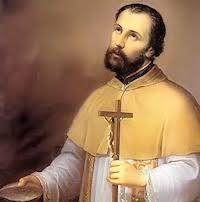
- Saint Peter Claver
- Family and Marriage
- Articles and notices
Dear Reader:
The latest incident between two “catholic” priests in Palm Beach, FL, in which they were caught performing “lewd and lascivious” acts on each other while parked in a car in broad daylight is just another indication of the direction of the conciliar church. After Vatican II, it became clear that the church was becoming a Protestant-Secular institution. No longer were they upholding the word of God or the teachings of His Son. No, they decided that the Commandments were just suggestions and Jesus’ teachings, while valid for His time, no longer applied. Now, the people could decide for themselves what was right or wrong, there were no absolutes. Mankind’s happiness on Earth is all that mattered and God would understand and forgive. Gradually, many of the faithful either decided that the church stood for nothing and began to doubt the very existence of God, or decided that their own individual conscience should dictate right or wrong depending on the situation. In this, Satan found his opening to the destruction of morality. Soon, the “church” would no longer apply it’s moral values, based on God’s word but would offer forgiveness to all sinners regardless of whether they repented and atoned. They then allowed men into their seminaries without proper vetting. This resulted in evil-doers becoming a “priest” that had no intention of adhering to their vows. Many used the respect in which they were held to take advantage of children. Others were able to turn the priesthood into a homosexual club. No longer did they have to say mass daily. They didn’t even have to believe in the vows they took. Is it any wonder that religion in general and Catholicism in particular is being attacked from all sides? All we can do as faithful Catholics, is to give the example that the conciliar church fails to do. Unfortunately, we will be lumped in with them. But we must have faith that though we may be persecuted on this earth, our Lord will welcome us into His kingdom for all eternity. Links:
Joseph Johns
________________
WHAT IS THE SACRAMENT OF CONFIRMATION?
by Rev. Courtney Edward Krier
XIV
Catechism of the Council of Trent
On the Sacrament of Confirmation
A sponsor required, and why.
In Confirmation, as in Baptism, a sponsor is required. If the gladiator who presents himself as a combatant, has occasion for the skill and address of a master, to direct him by what thrusts and passes he may, without endangering his own safety, dispatch his antagonist, how much more necessary to the faithful is a guide and instructor, when, sheathed as it were in the panoply of this sacrament, they engage in the spiritual conflict, in which eternal salvation is to reward the success of the victor. Sponsors therefore are, with great propriety, required in the administration of this Sacrament also; [Consequent affinity.] and the same affinity which, as we have already shown, is contracted in Baptism, impeding the lawful marriage of the parties, is also contracted in Confirmation. (Trid. Sess. 24. c. 2. de reform. matrim.)
The faithful to be instructed in the age and dispositions for Confirmation.
To pass over in silence those who have arrived at such a degree of impiety, as to have the hardihood to contemn and despise this Sacrament; since in receiving Confirmation it frequently happens, that the faithful betray inconsiderate precipitation or unpardonable neglect, it is the duty of the pastor to make known the age and dispositions which its sanctity demands.
Confirmation instiuted for the use of all the faithful.
They are, in the first place, to be informed that this Sacrament is not essential to salvation; but that although not essential, it is not therefore to be omitted: on the contrary, in a matter so holy, through which the gifts of God are so liberally bestowed, the greatest care should be taken to avoid all neglect; and what God proposed for the common sanctification of all, all should desire with intense earnestness. (De consec. dist 5. c. 2. et 3. item Conc. Aurel. c. 3. Hugo de sanct Vict, de Sacram. lib. 2. p. 7. c. 39) Describing this admirable effusion of the Holy Spirit, St. Luke says: “And suddenly there came a sound from heaven, as of a mighty wind coming, and it filled the whole house, where they were sitting:” and a little after, “and they were all filled with the Holy Ghost.” (Acts ii. 2. 4.) From these words we may infer, that as the house in which they were assembled, was a type and figure of the church, the Sacrament of Confirmation, which had its existence for the first time on that day, is intended for the use of all the faithful. This is also an easy inference from the nature of the Sacrament: Confirmation is necessary for those who have occasion for spiritual increase, and hope to arrive at religious perfection; but to this all should aspire, for as Nature intends that all her children should grow up and reach full maturity, although her wishes are not always realized; so it is the earnest desire of the Catholic Church, the common mother of all, that those whom she has regenerated by Baptism, may be brought to perfect maturity in Christ. This happy consummation can be accomplished only through the mystic unction of Confirmation; and hence it is clear, that this Sacrament is equally intended for all the faithful.
The proper age for its reception.
It is to be observed, that the Sacrament of Confirmation may be administered to all, as soon as they have been baptized; but, until children shall have reached the use of reason, its administration is inexpedient. If not postponed to the age of twelve, it should therefore be deferred until at least that of seven. Confirmation has not been instituted as necessary to salvation; but to enable us to be armed and prepared, whenever we may be called upon, to fight for the faith of Christ; and for this conflict no one will consider children, not yet arrived at the use of reason, fit subjects.
Dispositions for receiving it worthily.
From what has been said, it follows, that persons of mature years who are to be confirmed, must, if they hope to receive the grace of this Sacrament, not only bring with them faith and devotion, but also be pierced with heartfelt compunction for the grievous sins into which they may have had the misfortune to fall. The pastor, therefore, will labour to induce them to have previous recourse to the tribunal of penance, will endeavour to excite them to fasting and other exercises of devotion, and will exhort them to the revival of that laudable practice of the ancient Church, of receiving the Sacrament of confirmation fasting. (D. Th. p. 3. q. 72. a. ad. 2 Conc. Aur. c. 2.) To induce the faithful to enter into these dispositions would appear no difficult task, if they but learn to appreciate the blessings and extraordinary effects which flow from this Sacrament.
Effects of confirmation.
- The pastor therefore will teach, that in common with the other sacraments, Confirmation, unless some obstacle be opposed by the receiver, imparts new grace. We have already shown, that it is the property of these sacred and mystic signs, at once to indicate and produce grace; and as we cannot imagine grace and sin to coexist in the soul, it follows, as a necessary consequence, that it also remits sin.
- Besides these properties, common alike to this and the other Sacraments, it is the peculiar characteristic of confirmation to perfect the grace of baptism: those who are initiated into the Christian religion, share, as it were, the tenderness and infirmity of new-born infants; but they afterwards gather strength from the Sacrament of chrism, to combat the assaults of the world, the flesh, and the devil, and are confirmed in faith to confess and glorify the name of our Lord Jesus Christ. From this last mentioned circumstance it arose, no doubt, that the Sacrament was distinguished by the name of confirmation. [An error refuted.] This its name is not, as some with equal ignorance and impiety have imagined, derived from the supposed circumstance of baptized persons, when grown to maturity, formerly presenting themselves before the bishop to confirm their adherence to the faith of Christ, which they had embraced in baptism; an opinion, according to which, confirmation would not seem to differ from catechetical instruction. Of such a practice no proof can be adduced, no vestige traced; and this sacrament is called Confirmation, because by virtue of it, God confirms in us what was commenced in baptism, and conducts to the perfection of solid Christian virtue. (Trid. Sess. 7. can. 1de confir.)
III. Not only does this Sacrament confirm; it also increases divine grace in the soul: “The Holy Ghost,” says Melchiades, “who descends with salutary influence on the waters of baptism, imparts the plenitude of grace to innocence: in confirmation, the same Holy Ghost gives an increase of divine grace, and not only an increase, but an increase after a wonderful manner. (De cons. dist. 5 c. Spiritus. Euseb. Emis. hom. in die Pent.) This extraordinary efficacy of confirmation, the Scriptures beautifully express by a metaphor: “stay you in the city,” says our Lord speaking of this Sacrament, ” until you be indued with power from on high.” (Luke xxiv. 49)
Its efficacy illustrated.
To show the divine efficacy of this Sacrament, (and this, no doubt, will have great influence on the minds of the faithful) the pastor has only occasion to explain the effects which it produced on the Apostles themselves. Before, and even at the very time of the passion, so weak and listless were they, that no sooner was our Lord apprehended, than they all fled; (Matth. xxvi. 56.) and Peter, who was destined to be the rock and foundation of the Church, and who had displayed an unshaken constancy, and an intrepid spirit to be dismayed by the appearance of no danger, (Matth. xvi. 18-26. 51.) was so terrified at the voice of one weak woman, as to deny once, and again, and a third time, that he was a disciple of Jesus Christ. (Matth. xxvi. 70. 72. 74.) Even after the resurrection they remained, through fear of the Jews, shut up in a house, the doors being closed. (John xx. 19.) But how extraordinary the revolution! On the day of Pentecost, filled with the grace of the Holy Ghost, they fearlessly, and in defiance of all danger, proclaim the Gospel, not only through Judea, but throughout the world; (Acts ii.1.) they deem it the greatest happiness, to be thought worthy to suffer contumely, chains, tortures, and crucifixion itself, for the name of Christ. (Acts v. 41.)
- Confirmation has also the effect of impressing a character; and hence, as we said before, with regard to baptism, and as will be more fully explained in its proper place, with regard toorders, it is on no account to be administered a second time. If these things are frequently and accurately explained, it is almost impossible that the faithful, knowing the utility and dignity of this Sacrament, should not use every exertion to receive it with piety and devotion. (Confirmationem non esse iterandam, vide de Consec. dist. 5. c. dictum est, et cap. de hom. D. Thom, p. 3. q. 72. art. 5.)
Its rites and ceremonies explained.
The rites and ceremonies used in the administration of this Sacrament, now remain lightly to be glanced at: the advantages of this explanation the pastor will at once see, by reverting to what we have already said on this subject, in its proper place. [Unction of the forehead] The forehead of the person to be confirmed is anointed with sacred chrism; for in this Sacrament the Holy Spirit pours himself into the souls of the faithful, and imparts to them increased strength and courage, to enable them in the spiritual contest, to fight manfully, and to resist successfully their most implacable foes. They are therefore told, that henceforward, they are not to be deterred by fear or shame, feelings of which the countenance is the principal index, from the open confession of the name of Christ. (Rhaban. lib. 1. de instit. cleric, c. 30. et habetur de consec. dist. 5, c. noviss Aug. in Ps. 141, D. Thom. 3. p. q. 71. art. 9.) [Sign of the cross] Besides, the mark by which the Christian is distinguished from all others, as the soldier is distinguished by his peculiar military badges, should be impressed on the forehead, the most dignified and conspicuous part of the human form.
Why administered at Pentecost.
The festival of Pentecost was also chosen for its solemn administration, because the Apostles were then strengthened and confirmed by the power of the Holy Ghost; (Acts ii. 2.) and also to remind the faithful, by the recollection of that supernatural event, of the number and magnitude of the mysteries contained in that sacred unction.
The gentle slap on the cheek.
The person, when confirmed, receives a gentle slap on the cheek from the hand of the bishop, to remind him, that as a courageous champion, he should be prepared to brave with unconquered resolution, all adversities for the name of Christ.
The kiss of peace.
Finally, he receives the kiss of peace, to give him to understand that he has been blessed with the fulness of divine grace, and with that “peace which surpasseth all understanding.” (Phil. iv. 7. 146.) These things will be found to contain a summary of the exposition to be given by the pastor on the Sacrament of confirmation; but let them be delivered, not so much in the cold language of formal instruction, as in the burning accents of fervent piety; so as to penetrate into the minds, and inflame the hearts of the faithful.
(To be continued)
————————–
Dr. Pius Parsch
The Church’s Year of Grace (1959)
SIXTEENTH SUNDAY AFTER PENTECOST
He who humbles himself will be exalted
Transitional from summer to autumn are the three Sundays, the fifteenth, sixteenth, and seventeenth after Pentecost. In addition to the themes found heretofore, there appears that of hope and preparation for Christ’s Second Advent—it is harvest time in the Church’s year of grace. Of this new turn last Sunday’s Gospel mystery of the resurrection of the young man at Naim may be taken as introductory. This new spirit in the liturgy is not quite as evident today, but a sensitive ear will not fail to perceive certain strains—the afflictions of the final days are struck in various keys. Paul in chains foreshadows and discourses on the end of the world. The chants petition aid and forgiveness. Autumn is nature in old age (Comm.). Humility is the virtue desperately needed.
- Text Analysis.It is always easier to participate intelligently and profitably in a Mass if we know its central theme. Between the meal described in today’s Gospel and the holy Banquet of Mass there is indeed an evident analogy (and the use of such “banquet narratives” as figures of the Mass are common in the missal), but it would seem forced to fit the other texts into any given pattern. It would be preferable to use another approach, viz., to single out the formulary’s teaching on the parousia. Three headings could be made: (a) cries of suffering due to oppression and earthly evils; (b) a spirit of hope in things to come; (c) concern over personal salvation. A bit of commentary on each.
- a) The increasing darkness in the world of nature about us is a sign and symbol of the suffering and affliction that will usher in the final era, as well as the last moments of each person’s life. With this in mind we have the proper background for the tearful tone of the chants from the Introit to the Communion; only once is there a gladsome strain, at the thought of the hereafter in the Gradual. Today’s texts show us how the Mass can be true solace in the sufferings of life.
- b) Into the darkness of present afflictions the star of heavenly hope does cast its bright beams. Before our eyes the Gradual momentarily places the dazzling scene of the heavenly Jerusalem (prompted by the final lines of the Epistle): “The Lord makes His kingdom resplendent. He now appears in grandeur!” What a singularly apt introduction to the Alleluia, heaven’s hymn; it is indeed the “new song” that only the saved can sing when they behold the marvels of God in all their transcendent beauty.
- c) Our certain hope of beatitude must not engender spiritual idleness. Quite the contrary. The expectation of the Lord’s return is a challenge to ready ourselves, to strive heroically for personal perfection. Here we touch upon the formulary’s principal message, and one easily detectable in the Lessons and other prayer texts. Three prerequisites to holiness are underscored, i.e., actuating grace, prayer, humility. In the whole missal there can be found no more incisive statement on God’s grace which “precedes and accompanies us, ever inciting us to the performance of virtuous deeds.” Such actuating grace is given in response to persevering prayer. Our formulary offers numerous apt forms in which to cast our pleas, e.g., Psalm 85; the Offertory and Communion verses; and St. Paul’s magnificent Epistle on prayer. Without prayer, no actuating grace; without actuating grace, no good act; without good acts, no holiness. Presupposed, moreover, in all efforts toward holiness is the spirit of humility (Gosp.).
The characteristics of true holiness are not absent from Paul’s thought-packed Epistle: first, Christ’s abiding presence within us; secondly, a charity, firm and solidly established; thirdly, an ever-expanding comprehension of the mystery of faith. Thereby we may become “filled with all the fullness of God.” Could any class period on holiness be more helpful and enlightening than our Mass today?
- Holy Mass (Miserere mihi).The skies are clouded over; persecution, spiritual trials and conflicts weigh heavily upon the mystical Christ. Last Sunday the sun soon shone through, but today the storm clouds stay until the end, with the light penetrating but once (Grad., Allel.). In nature too the approach of winter is evident; the days are becoming shorter, the nights longer—a symbol of the “dark night of the soul” and persecution. With today’s holy Mass there begins a series of Epistles culled from the letters St. Paul wrote in prison, letters containing profound theology. In the Gradual are heard the parousia bugles, and their call will swell louder and louder on coming Sundays.
The Mass begins with a gripping Miserere; the members of Christ’s Mystical Body are imploring mercy for needy souls; they rest their plea on three counts: (a) because as the Mystical Body they pray throughout the day (hours of Divine Office); (b) because God is “sweet and mild and plenteous in mercy”; (c) because souls are so “needy and poor.” Much grace is necessary, grace that will act as a guide (even as a star guided the Magi), and as a companion (as Raphael accompanied Tobias) upon the way of life (Coll.), or souls cannot yield “good fruits.”
In the words of St. Paul and after his example, Mother Church with a heart deeply moved urges us on to perfection in a Lesson aglow with unusual warmth. It is her plea (a) that we too may ever grow unto the perfection of the “inward man” (i.e., in sanctity); (b) that Christ may live by faith in our hearts; and (c) that we may be rooted and founded in charity (what roots are to a tree, love is to the spiritual structure). The heart of Mother Church (St. Paul’s too) is so moved that she struggles for words to express more adequately God’s goodness and love—”That you also may understand Christ’s love, a love which transcends all human experience, enabling you to be filled with all the fullness of God.” A life superabundantly rich in grace is the Church’s concern for all her children.
Hardly has the Reading concluded with the doxology “to God be the glory through the Church, and through Christ Jesus,” when the Gradual discloses the vision of the parousia when all things will be perfected, when Christ at His Second Coming will gather all earth’s kings about Himself, when the “heavenly Sion,” the Church, which is now so severely persecuted, will be newly built, and the Lord will be seen shining in majesty. Then will the fullest, boundless Easter joy reign, then will the Church sing the “new canticle” of redemption, the eternal Alleluia.
The Gospel, one of the so-called banquet-parables, opens two major thought areas: (a) Jesus, the Savior, is the Physician of man’s sick soul (especially on Sundays); (b) His medicine is humility. Here you have the reason why the virtue of humility is inculcated so often in the liturgy. It is the foundation virtue of Christianity, a panacea for many ills. The Sabbath-day meal to which Jesus came symbolizes the Sunday Eucharistic banquet; here Christ heals us from the dropsy of worldly spirit by giving us instruction in the Mass of the Catechumens and by nourishing us with divine Food in the Mass of the Faithful.
With the Offertory tears flow again as we recognize our miserable lot in the midst of enemies; with growing vehemence the opening cry for aid is repeated. Imagine how powerful this Offertory was in its former extended form with the antiphon, “Hasten, Lord, to help me,” repeated three times. The Secret is cast in a somewhat negative mold; may the Sacrifice effect a greater purification of our souls. No Eucharistic hymn is sung at the Communion, rather a thanksgiving prayer for God’s gracious guidance during youth and an anxious glance toward old age; may He accompany me then also—thus making holy Communion a true Viaticum upon the way. My whole life’s story is covered in this Communion chant; God is my Savior during childhood, youth, middle and old age. Purification and spiritual renewal by means of the Eucharist constitute the burden of the Postcommunion prayer; as a special turn it petitions help for the body. The Eucharist is a fountain of life for one’s body too.
- Divine Office.The two greater antiphons cull out the Gospel’s main message: “When Jesus entered the house of a leading pharisee on the Sabbath day to have a meal, a certain man appeared before Him who had dropsy. Taking hold of him, Jesus healed him and sent him away.” (Keep in mind themysterium, i.e., the re-actualizing of past events at the present time in a sacramental, mystical manner through the liturgy.) “When you are invited to a wedding dinner, go and sit at the far end of the table. Then when your host comes he can say to you: My friend, take a place higher up. In that case it will be to your honor before all the other guests, alleluia.” Opportunities for practicing humility are never hard to find.
- Sunday Meditation.The Gospel. A “leading pharisee,” that is, a pharisee enjoying an influential position in the Synagogue, once invited a number of other pharisees and Jesus to dinner. But his real motive was not to entertain his Messianic Guest or to gain a better understanding of His teaching; rather, as the Gospel says, it was “to watch Him closely,” that is, to gather incriminating evidence against Jesus. The desired opportunity soon presented itself, for a man afflicted with dropsy slipped into the dining room unnoticed (not an extraordinary occurrence in the East) and placed himself before Jesus, undoubtedly with the silent plea to be healed. It was the Sabbath. Jesus Himself placed the question whether it was lawful to heal on the Sabbath. No answer. The pharisees maintained an icy silence. The Savior made answer by action. He healed the sick man by His touch and dismissed him.
Since the pharisees remained silent still, Jesus proceeded to prove that the cure was no violation of God’s Law. He said: If your ox or ass would happen to fall into a pit on the Sabbath, would you hesitate as much as an instant before drawing the poor animal out? Now why should a sick man be treated worse than an ox? The logic was overpowering, and the pharisees could not retort. Those sticklers on the letter of the Law had again condemned themselves. Now the lesson we must learn is that love of neighbor cannot be divorced from love of God. The Lord’s day is indeed holy; it can never, however, be desecrated through deeds of love done toward one’s fellow man. For every good act toward one’s neighbor is likewise a good act toward God.
Upon what, then, were the thoughts and aspirations of these much-to-be-pitied pharisees centered? Their own ego. Beneath attractive turbans and pompous festal robes were hidden hearts chuck-full of pride and self-love. Jesus had observed this in the way they had chosen the first places at table before the meal. Now He would comment upon that. He said: Even human tactfulness should prompt you to choose the lower seats at a banquet and not the highest. Otherwise it may happen that if the guestmaster has invited a person of nobler rank, you will have to step down, to your own humiliation. How it would redound to your honor if you had seated yourself at the end of the table and then were advanced by the guestmaster!
Now what is the point our Lord wished to make by that observation? Surely it was not a lesson in etiquette. He wished to teach a fundamental virtue of our religion, holy humility. Christ was not speaking of mere human prudence, as if man could merit and obtain an exaltation through fictitious self-abasement. Such would be a calculating humility, yes, it would be pride concealed. In this instance Jesus is speaking of true humility which is infinitely removed from that species of pride which exteriorly selects a humble place yet interiorly covets the higher. Our Master wishes that even in our hearts we feel at home when in the lowest place. The Christian especially should be humble, for he knows that he is a poor sinner; he knows that the good he has is wholly due to the grace of God, not to himself. The great lesson which Christ teaches today is humility. Add to your spiritual stature by absorbing its spirit somewhat more perfectly.
———————–
9: ST PETER CLAVER (A.D. 1654)
In the United States of America, this is the principal feast for this date.
IF to England belongs the honour of having begun the work of abolishing the slave trade in 1815, it was she also who, in the person of such national heroes as Sir John Hawkins, played a great part in establishing that trade between Africa and the New World in the sixteenth century. And of the heroes who in the intervening period devoted their lives to the interests of the victims of this nefarious exploitation, the most were from countries which had not received the enlightenment of the Reformers. Among them none was greater than St Peter Claver, a native of that Spain whose history in his time is represented for most Englishmen solely by the buccaneering of an unscrupulous imperialism and the fantastic cruelty of an ecclesiastical inquisition. He was born at Verdu, in Catalonia, about 1581, and as he showed fine qualities of mind and spirit was destined for the Church and sent to study at the University of Barcelona. Here he graduated with distinction and, after receiving minor orders, determined to offer himself to the Society of Jesus. He was received into the novitiate of Tarragona at the age of twenty, and was sent to the college of Montesione at Palma, in Majorca. Here he met St Alphonsus Rodriguez, who was porter in the college, though with a reputation far above his humble office, and this meeting was to set the direction of Peter Claver’s life. He studied the science of the saints at the feet of the lay-brother, and Alphonsus conceived a corresponding regard for the capabilities of the young scholastic, and saw in him a man fit for a new, arduous and neglected work. He fired him with the idea of going to the help of the many who were without spiritual ministrations in the colonies of the New World.
In after years St Peter Claver said that St Alphonsus had actually foretold to him that he would go and the very place wherein he would work. Moved by the fervour of these exhortations Peter Claver approached his provincial, offering himself for the West Indies, and was told that his vocation would be decided in due course by his superiors. He was sent to Barcelona for his theology and after two years was, at his further request, chosen to represent the province of Aragon on the mission of Spanish Jesuits being sent to New Granada. He left Spain for ever in April 1610, and after a wearisome voyage landed with his companions at Cartagena, in what is now the republic of Colombia. Thence he went to the Jesuit house of Santa Fe to complete his theological studies, and was employed as well as sacristan, porter, infirmarian and cook, and was sent for his tertianship to the new house of the Society at Tunja. He returned to Cartagena in 1615 and was there ordained priest.
By this time the slave trade had been established in the Americas for nearly a hundred years, and the port of Cartagena was one of its principal centres, being conveniently situated as a clearing-house. The trade had recently been given a considerable impetus, for the local Indians were not physically fitted to work in the gold and silver mines, and there was a big demand for Negroes from Angola and the Congo. These were bought in West Africa for four crowns a head, or bartered for goods, and sold in America for two hundred crowns. The conditions under which they wer
…
[Message clipped] View entire message