Vol 14 Issue 28 ~ Editor: Rev. Fr. Courtney Edward Krier
July 10, 2021 ~ Our Lady on Saturday
1. The Incarnation of the Word of God—Eberhard Heller
2. Seventh Sunday after Pentecost
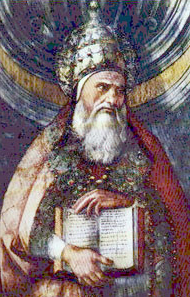
3. Saint Pius I
4. Family and Marriage
5. Articles and notices
Dear Reader:
The following tale from Hans Christian Andersen, who lived in the 19th century and could observe the modern social movements in vogue at his time, is presented because it, like 1984 of George Orwell, is a satire of society that becomes prophetical. The absolute façade of present policies that we are told are making society better are obviously making society worse. The fact of telling us that we must call a man a woman and a woman a man while it is obvious that the man is a man and the woman is a woman defies all rationale. But everyone is afraid to say otherwise for to do so places one under the fear of political incorrectness for opposing these swindlers of social engineering and face societal ostracization. It is a reality: say something politically incorrect, such as a boy saying he is a girl should not be allowed in the girls’ changing room and you are charged with a hate crime and discrimination—so now everyone allows boys in the girls’ changing room and there is no opposition. Anyone with common sense would see the blaring reality unless deliberately choosing not to. That is why our Lord performed absolute miracles: Everyone knows that only God can perform true miracles and that one would have to choose to go contrary to what is self-evident in rejecting Christ’s claim to be God—but people witnessing the miracles still did.
The Emperor’s New Clothes
By Hans Christian Andersen
Many years ago there was an Emperor so exceedingly fond of new clothes that he spent all his money on being well dressed. He cared nothing about reviewing his soldiers, going to the theatre, or going for a ride in his carriage, except to show off his new clothes. He had a coat for every hour of the day, and instead of saying, as one might, about any other ruler, “The King’s in council,” here they always said. “The Emperor’s in his dressing room.”
In the great city where he lived, life was always gay. Every day many strangers came to town, and among them one day came two swindlers. They let it be known they were weavers, and they said they could weave the most magnificent fabrics imaginable. Not only were their colors and patterns uncommonly fine, but clothes made of this cloth had a wonderful way of becoming invisible to anyone who was unfit for his office, or who was unusually stupid.
“Those would be just the clothes for me,” thought the Emperor. “If I wore them I would be able to discover which men in my empire are unfit for their posts. And I could tell the wise men from the fools. Yes, I certainly must get some of the stuff woven for me right away.” He paid the two swindlers a large sum of money to start work at once.
They set up two looms and pretended to weave, though there was nothing on the looms. All the finest silk and the purest old thread which they demanded went into their traveling bags, while they worked the empty looms far into the night.
“I’d like to know how those weavers are getting on with the cloth,” the Emperor thought, but he felt slightly uncomfortable when he remembered that those who were unfit for their position would not be able to see the fabric. It couldn’t have been that he doubted himself, yet he thought he’d rather send someone else to see how things were going. The whole town knew about the cloth’s peculiar power, and all were impatient to find out how stupid their neighbors were.
“I’ll send my honest old minister to the weavers,” the Emperor decided. “He’ll be the best one to tell me how the material looks, for he’s a sensible man and no one does his duty better.”
So the honest old minister went to the room where the two swindlers sat working away at their empty looms.
“Heaven help me,” he thought as his eyes flew wide open, “I can’t see anything at all”. But he did not say so.
Both the swindlers begged him to be so kind as to come near to approve the excellent pattern, the beautiful colors. They pointed to the empty looms, and the poor old minister stared as hard as he dared. He couldn’t see anything, because there was nothing to see. “Heaven have mercy,” he thought. “Can it be that I’m a fool? I’d have never guessed it, and not a soul must know. Am I unfit to be the minister? It would never do to let on that I can’t see the cloth.”
“Don’t hesitate to tell us what you think of it,” said one of the weavers.
“Oh, it’s beautiful -it’s enchanting.” The old minister peered through his spectacles. “Such a pattern, what colors!” I’ll be sure to tell the Emperor how delighted I am with it.”
“We’re pleased to hear that,” the swindlers said. They proceeded to name all the colors and to explain the intricate pattern. The old minister paid the closest attention, so that he could tell it all to the Emperor. And so he did.
The swindlers at once asked for more money, more silk and gold thread, to get on with the weaving. But it all went into their pockets. Not a thread went into the looms, though they worked at their weaving as hard as ever.
The Emperor presently sent another trustworthy official to see how the work progressed and how soon it would be ready. The same thing happened to him that had happened to the minister. He looked and he looked, but as there was nothing to see in the looms he couldn’t see anything.
“Isn’t it a beautiful piece of goods?” the swindlers asked him, as they displayed and described their imaginary pattern.
“I know I’m not stupid,” the man thought, “so it must be that I’m unworthy of my good office. That’s strange. I mustn’t let anyone find it out, though.” So he praised the material he did not see. He declared he was delighted with the beautiful colors and the exquisite pattern. To the Emperor he said, “It held me spellbound.”
All the town was talking of this splendid cloth, and the Emperor wanted to see it for himself while it was still in the looms. Attended by a band of chosen men, among whom were his two old trusted officials-the ones who had been to the weavers-he set out to see the two swindlers. He found them weaving with might and main, but without a thread in their looms.
“Magnificent,” said the two officials already duped. “Just look, Your Majesty, what colors! What a design!” They pointed to the empty looms, each supposing that the others could see the stuff.
“What’s this?” thought the Emperor. “I can’t see anything. This is terrible!
Am I a fool? Am I unfit to be the Emperor? What a thing to happen to me of all people! – Oh! It’s very pretty,” he said. “It has my highest approval.” And he nodded approbation at the empty loom. Nothing could make him say that he couldn’t see anything.
His whole retinue stared and stared. One saw no more than another, but they all joined the Emperor in exclaiming, “Oh! It’s very pretty,” and they advised him to wear clothes made of this wonderful cloth especially for the great procession he was soon to lead. “Magnificent! Excellent! Unsurpassed!” were bandied from mouth to mouth, and everyone did his best to seem well pleased. The Emperor gave each of the swindlers a cross to wear in his buttonhole, and the title of “Sir Weaver.”
Before the procession the swindlers sat up all night and burned more than six candles, to show how busy they were finishing the Emperor’s new clothes. They pretended to take the cloth off the loom. They made cuts in the air with huge scissors. And at last they said, “Now the Emperor’s new clothes are ready for him.”
Then the Emperor himself came with his noblest noblemen, and the swindlers each raised an arm as if they were holding something. They said, “These are the trousers, here’s the coat, and this is the mantle,” naming each garment. “All of them are as light as a spider web. One would almost think he had nothing on, but that’s what makes them so fine.”
“Exactly,” all the noblemen agreed, though they could see nothing, for there was nothing to see.
“If Your Imperial Majesty will condescend to take your clothes off,” said the swindlers, “we will help you on with your new ones here in front of the long mirror.”
The Emperor undressed, and the swindlers pretended to put his new clothes on him, one garment after another. They took him around the waist and seemed to be fastening something – that was his train-as the Emperor turned round and round before the looking glass.
“How well Your Majesty’s new clothes look. Aren’t they becoming!” He heard on all sides, “That pattern, so perfect! Those colors, so suitable! It is a magnificent outfit.”
Then the minister of public processions announced: “Your Majesty’s canopy is waiting outside.”
“Well, I’m supposed to be ready,” the Emperor said, and turned again for one last look in the mirror. “It is a remarkable fit, isn’t it?” He seemed to regard his costume with the greatest interest.
The noblemen who were to carry his train stooped low and reached for the floor as if they were picking up his mantle. Then they pretended to lift and hold it high. They didn’t dare admit they had nothing to hold.
So off went the Emperor in procession under his splendid canopy. Everyone in the streets and the windows said, “Oh, how fine are the Emperor’s new clothes! Don’t they fit him to perfection? And see his long train!” Nobody would confess that he couldn’t see anything, for that would prove him either unfit for his position, or a fool. No costume the Emperor had worn before was ever such a complete success.
“But he hasn’t got anything on,” a little child said.
“Did you ever hear such innocent prattle?” said its father. And one person whispered to another what the child had said, “He hasn’t anything on. A child says he hasn’t anything on.”
“But he hasn’t got anything on!” the whole town cried out at last.
The Emperor shivered, for he suspected they were right. But he thought, “This procession has got to go on.” So he walked more proudly than ever, as his noblemen held high the train that wasn’t there at all.
As always, enjoy the readings provided for your benefit.—The Editor
________________
The Incarnate Word
The Errors of Vatican II and their defeat by Recognizing Christ as Son of God
by Eberhard Heller; translation: Elisabeth Meurer
On the other hand: If one looks at the development of the Church in relationship to the “world” – besides the definition of a view point, that is, the way it sees itself with regard to Protestantism (already long before the beginning of Vatican II), one must realize that on the one hand the world had already been more and more secularized even before the French Revolution, but on the other hand the Church had given up more and more ground on which it was setting up the tone by the beginning of the 19th century. So it had lost its leading position in the field of art by the end of the Rococo period. Just imagine the Baroque era without the sacral buildings, without the marvellous ceiling frescos in the Churches, without the overwhelming stucco works. The answer in the new styles, for example the romantic, impressionist and expressionist, there was the recourse to previous eras. One should just think of the neo-romanesque as well as the neo-gothic Churches in the field of architecture. In the field of Art the academic Nazarene style won over.
In the field of philosophy the development which began with Descartes and which was led further through Kant, Reinhold and Fichte and which had been characterized by the question of how knowledge is possible as knowledge and how it can be justified, where the issue was justifying knowledge – and not the being – had been missed completely. It was only in the Praemonstratenser abbey in Polling (upper Bavaria) where they had occupied themselves with the writings of Kant. There was too much confidence in Thomism – which is controverted – as a safe philosophical base. The latter has – just in religious-philosophical matters – not even brought up a clear notion of God. For the so-called “Quinque viae”, the so-called proofs of God by Thomas are – on a philosophical point of view – mere tautologies, which just prove nothing. (Notabene: This alienation of members of the Church, especially of the theologians from the general scientific development of sciences has caused an inferiority complex among several people. Not without reason! One of the reasons why the theological positions of the modernists were adopted so willingly but also uncritically was to be found in their adaptation of modern philosophical (Hegelian) theories).
There were enough occasions to think about the relationship of the Church towards a secularized, i. e. towards a world getting further and further away from God. The Church had to draw up a new way concerning the way it saw itself and its tasks in the world, because it had no longer the spiritual sovereignty over politics which in the meantime insisted on its autonomy. It could not simply ignore its historical context. How was Christ’s order to Peter: “Feed my sheep” (John 21, 17) to be executed under the changed historical circumstances?
“However, fighting for a new, deeper way of the Church to see itself, while directed from inside, was but one aspect of an even more extensive new orientation towards the outside, that is, in the relationship towards the ‘world’. When the Council of Trent assembled, there was still a Christianity and an Occidental Christian culture; the First Vatican Council was already facing a culture which was no longer marked by Christianity but still European, against which Pope Pius IX, in the Syllabus, had sharply divided.” (Hubert Jedin ibid., p. 129) The ten drafts concerning the constitution and the mission of the Church, which were to be also considered at the First Vatican Council, could not be voted upon as the Franco-Prussian War broke out in 1870. They had spent far too much time discussing the infallibility of the Pope. Then, as the French withdrew their troops from the Papal States which they were helping to protect, the Italians were able to conquer the Papal States with barely a fight, annexing them on September 20th.
“It (the First Vatican Council) had abstained from adapting the ways of preaching and service, spiritual social work and organization of the Church to conditions completely changed by industrialization; and, only in one respect had it filled a gap in the decisions of Trent: the definition of Papal primacy and the official infallibility of the Pope with regard to the papal office. But even these definitions were only one segment of the originally planned Constitution on the Church which Trent had to postpone, because the opinions of the theologians and canonists about the nature and constitution of the Church diverged too much.” (Hubert Jedin ibid., p. 127)
In order to fill this vacuum Pius XII published the encyclical Mystici Corporis Christi on June 29th, 1943, where the pope stated that the Mystical Body of Christ and the Roman Catholic Church are identical. The encyclical represents the most important document of the Church in the development of the teaching about itself, i. e. the ecclesiology since 1800. (Cf. also EINSICHT no. 2 of February 2004)
If one thinks about the concept of “Church” and its place, a further aspect was added in the Third Reich and after the Second World War, namely: How to form the relationship towards other confessions, other religions? In the Third Reich there were fields in the fight against National Socialism where the Catholic Church and the Lutheran confessions operated together. Therefore there were efforts after the war to test the possibility of a reunification with the motto of finding the “Union in truth” – and not the “Union without truth”. One of its representatives was the important Lutheran theologian Hermann Otto Erich Sasse (1895-1976), who in 1948 as a protest against the foundation of the EKD (Evangelical Church in Germany), especially against the joining of the Bavarian established Protestant Church, converted to the Protestant-Lutheran (Old Lutheran) Church, and accepted the leadership of the Lutheran Church of Australia in 1949 and emigrated.
On this historical background one must not be amazed that the subject of ecclesiology became of central important once again at Vatican II.
Pope Pius XI certainly had thought of continuing the interrupted Vatican I, but he writes in his first encyclical “Ubi arcano dei consilio” of December 23rd, 1922, no. 51: “We scarcely dare to include, in so many words, in the program of Our Pontificate the reassembling of the Ecumenical Council which Pius IX, the Pontiff of Our youth, had called but had failed to see through except to the completion of a part, albeit most important, of its work. We as the leader of the chosen people must wait and pray for an unmistakable sign from the God of mercy and of love of His holy will in this regard.” (cf. Judges vi, 17)
“The Second Vatican Council was convened by John XXIII in person. The former professor of Church history probably was familiar with the importance of the general Councils and, by his long stay in Sofia and Constantinople, he probably knew the synodal life of the eastern Churches. However, it was not a long-cherished and thoughtful plan when he announced to the cardinals the convening of a Roman diocesan synod and an “Oecumenical Council” after the station service in St. Pauls on January 25th, 1959; he followed a sudden inspiration from above, as he repeatedly insisted.” (Hubert Jedin ibid., p. 131)
During the first meeting of the commission for the preparation of the Council (the Commissio antepreparatoria) formed on May 17th, 1959, he declared (on June 30th,1959)
“The Council is convoked, first of all because the Catholic Church [. . .] proposes to attain new vigor for its divine mission. Perennially faithful to the sacred principles on which it stands and to the immutable doctrine entrusted by the Divine Founder, the Church [. . .] always following the footprints of ancient tradition, intends [. . .] to strengthen life and cohesion in the face of the many daily contingencies and situations, and it will establish efficient norms of conduct and activity.” The slogan of “Aggiornamento” was created. Ten commissions were convened to execute all that, to which the “Office of the Christians’ Union” under Cardinal Bea was added.
When Vatican II was finally opened on October 11th, 1962, in the presence of more than 2500 fathers of the Council, John XXIII had already worked in advance pointing the way ahead for the program of the Council by appointing the presidents directing the ten general congregations. In the first period of the convention, it was in the hands of the Cardinals Tisserant, Lienart, Spellman, Frings, Ruffini and Alfrink. With the beginning of the second period this post was taken over by four presenters, the cardinals Agagianian, Döpfner, Lercaro and Suenens.
When John XXIII died on June 3rd, 1963, the Council was continued by Paul VI who had been appointed his successor on June 21st, 1963. He was known to firmly approve of his predecessor’s line of “Aggiornamento”, along with Cardinal Lercaro.
I do not intend to make a historical presentation of how the Council went off, this would go too far for our intention. There is extensive literature about this. But I would like to point out some issues which became pointers to the way of its end.
Paul VI who had appointed three cardinals of the progressive wing for the direction of the general congregations “in his opening speech on September 29th, 1963, gave the Council four tasks, more precisely than his predecessor had ever done: an explanation of ministry of the nature of the Church, thus pushing forward the scheme De ecclesia, its interior renewal, the support of the union of Christians and – again new in this form – the dialogue of the Church with the world of today. For the first and now main task to resume the way the Church saw itself in a constitution of ministry, a decisive guideline was given by the sentence: “Regardless of the dogmatic explanations of the First Vatican Council about the Roman pope, the doctrine about the episcopacy, about its tasks and its necessary connection with Peter will have to be examined. From this will result guidelines for us as well of which we will reap the doctrinal and practical benefits in executing our apostolic mission.” (Hubert Jedin ibid., p. 148)
Important for the direction now given were the explanations of Card. Lercaro, one of the progressivists who in a meeting on October 1st, 1963, pointed out that the term of the Church which Pius XII had founded in Corpus Christi mysticum would not cover the reality of the visible Church, “because according to him all baptized people belong to the Mystical Body of Christ in a certain way without necessarily being members of the visible Catholic Church (cf. Jedin ibid., p. 149). By this the (heretical) result of “Unitatis redintegratio” was basically anticipated.
The Council ended with the well-known results which have been analysed in detail by us (since the publication of the first copy of our magazine in April 1971 with the publishing of the bull “Quo primum” by Pope St. Pius V).
(To be continued)
————————–
The Sunday Sermons of the Great Fathers
M. F. Toal
THE GOSPEL OF THE SUNDAY
MATTHEW vii. 15-21
At that time: Jesus said to his disciples: Beware of false prophets, who come to you in the clothing of sheep, but inwardly they are ravening wolves. By their fruits you shall know them. Do men gather grapes of thorns, or figs of thistles? Even so every good tree bringeth forth good fruit, and the evil tree bringeth forth evil fruit. A good tree cannot bring forth evil fruit, neither can an evil tree bring forth good fruit.
Every tree that bringeth not forth good fruit, shall be cut down, and shall be cast into the fire. Wherefore by their fruits you shall know them. Not every one that saith to me, Lord, Lord, shall enter into the kingdom of heaven: but he that doth the will of my Father who is in heaven, he shall enter into the kingdom of heaven.
I. ST EPHRAIM, CONFESSOR AND DOCTOR
On the Various Places of Torment and on the Judgement
We know from the Gospel that there are various places of torment. For it has been revealed to us that there is exterior darkness (Mt. viii. 12), and so it follows that there is also interior darkness (cf. Mk. v). The fire of Gehenna is another place, the abode of weeping and gnashing of teeth (Mt. xxv. 30). Another place speaks of the worm that dieth not (Mk. ix. 43). We read in another place of the pool of fire (Apoc. xix. 20), and again of tarturus, of unquenchable fire (Mk. ix. 42, 44). The lower world of destruction and perdition are written of in precise terms (Mt. vii. 13; I Tim. vi. 9). The depths of the earth is another place. The hell where sinners are tormented, and the depths of hell, a more fearful place. The wretched souls of the damned are distributed throughout these places of punishment, each one according to the nature of his sins; fearfully or less fearfully, as it is written: Each one is fast bound by the ropes of his own sins (Prov. v. 22); and this is what is meant by the servant who is beaten with many stripes or with few stripes (Lk. xii. 47, 48). For just as there are differences of sin so also are there differences in their punishment.
They who foment enmities among themselves, if they should happen to pass from this life in that state, they shall in that same hour undergo the inexorable condemnation of this Judge (Mt. v. 18), and as hateful to God they shall be cast into exterior darkness for having held as of no importance the precept of the Lord that says: Love one another, and forgive one another, even to seventy times seven. Let every sinner remember that he cannot live in security in this life, or free of anxiety; yet that we are never at any time to despair. For we have an Advocate with the Father, Jesus Christ (I Jn. ii. 1), and He is the propitiation for our sins; but not of the sins of those who live lives free from all concern and anxiety, lives of sloth, of sleeping, of living for pleasure, and laughter and drunkenness, but for the sins of those who grieve for their sins, who do penance for them, calling on Him in the day and in the night. It is these who shall receive the comfort of the Advocate.
But the sinner who is oblivious of his own sins, and who departs from his body in that state, upon him shall fall that anger which threatened Manasses; who cried: Insupportable, O Lord, is the anger of Thy threatening against those who sin (cf. 2 Paralip. xxxiii; Jer. x. 10). Woe to the fornicator, woe to the drunkard. Woe to the foul-tongued. Woe to those who drink with song and dance, with drums, with pipe and thabor, but the works of the Lord they regard not, nor do you consider of the works of his hands (Is. v. II, 12). Woe to those who despise the words of Holy Writ. Woe to gamblers as often as they shall make themselves strangers to the Body and Blood of the Lord Jesus Christ; as the Holy Spirit admonishes us through the blessed Apostles (Lk. vi; Jas. iv). Woe to those who waste the time of repentance in dissipation and folly; for they shall seek for this very time of repentance that they wasted in vain, and they shall not find it.
Woe to those who traffic with sorcerers, and seek to learn from the spirit of untruth; giving their minds to the teaching of demons: for they shall be condemned together with them in the world to come. Woe to those who bring forward false accusations. Woe to those who look for strange things, incantations, divinations, the blood of infants, amulets, dyes, protective oracles inscribed on leaves, which bring instead disaster to the body, and damnation to the soul, and all similar things. Woe to those that deprive the labourer of his wage (Jas. v. 4); for he who deprives the labourer of his wage is as one who sheds innocent blood. Woe to those who give judgement unjustly. Woe, I repeat, to those who for a bribe justify the wrong doer, and take away the right of the just.
Woe to those who stain the holy faith with heresies, or who give place to heretics. Woe to those who are afflicted with an incurable disease; such as are envy and malice. But to what end need I name so many sins instead of including all in a few words? Woe to all who in that dread hour shall be placed at the left-hand side: for they shall be in darkness, they shall tremble and they shall weep bitter tears when they hear that most fearful sentence: Depart from Me, you cursed. And some shall hear again that most doleful sentence: The wicked shall be turned into hell (Ps. ix. 15). Others will hear the words: Amen I say to you, I know you not, whence you are: depart from me, all ye workers of iniquity (Lk. xiii. 27). Others, the envious, will hear the words: Take what is thine, and go thy way (Mt. xx. 14). And hearing what He says, the dread word, go, they ask, whither? There where they also shall be who shall hear the words: Depart from me, ye cursed, into everlasting fire (Mt. xxv. 41).
Others will hear the command: Bind his hands and feet, and cast him into exterior darkness. Others shall be gathered together like chaff to be burned in the furnace of fire (Mt. xiii. 42). But just as there are many ways of salvation, so are there also many mansions in the kingdom of heaven. And as there are many kinds of sin, so are there various ways and places of torment.
Whosoever has tears and compunction of heart let him now weep with me. For I am mindful, my blessed brethren, of that unhappy separation, and I cannot support the thought of it. In that terrible hour men shall be separated, the one from the other, in that last and most sorrowful of all separations, and many shall go on their way destitute of all hope of ever returning. Who is there so stony of heart who will not from this time forward weep at the thought of that hour? That hour when bishops shall be separated from their fellow bishops, kings from kings, princes from princes, priests from other priests, deacons from the other deacons, hypodeacons (subdeacons) and readers from their companions. Then shall they be separated who once were kings, and they shall cry as children, and they shall be driven forward like slaves. Then shall princes mourn, and the rich who were without pity, and pressed in on every side they shall look here, look there, and find nowhere any one to help them. Then shall they be separated, to depart like captives into sorrow; where riches will not avail them, nor flatterers stand by them, there shall not be any place for mercy, for they had refused mercy to others; nor will they have sent mercy on before them, so that they might find it when they come, as the prophet says of such people: They have slept their sleep; and all the men of riches have found nothing in their hands (Ps. lxxv).
Then shall children be separated from their parents, and friends from friends. There in sorrow shall husband be separated from wife, because he has not kept his marriage bed undefiled. And they too shall be separated; they who though virgin in body were yet cruel and without mercy: For judgement without mercy to him that hath not done mercy (Jas. ii. 13). But I shall leave out many things here: for I am held by fear and trembling from speaking of them, and so I shall conclude in a few words.
Then at last they shall be driven forth from the Tribunal and led away by fierce angels, wretched and beaten, grinding their teeth, and turning back continuously to look once more if possible upon the just, and upon that joy from which they are now for ever cut off. And they see that ineffable Light, they glimpse the beauty of paradise, and see there amid that joy those they knew and who were once their friends. They see the great and shining gifts which they have received from the King of Glory; they who have striven lawfully for the mastery (II Tim. ii. 5).
Soon they are led away, separated from all the just, and from those they knew, and hidden from the sight of God Himself, so that they can no longer look upon that joy or upon that true Light. And now they draw near to those punishments we have spoken of earlier, to be divided from one another among these various places, seeing themselves abandoned on every side, destitute of all hope, of all help, and of all intercession on their behalf by others, abandoned. For the judgements of God are just. Thou art just, O Lord; and thy judgement is right (Ps. cxviii. 137). Then crying and weeping most bitterly they will exclaim: O why did we spend our time in neglect and indifference? O why have we deceived ourselves? O how we have mocked at ourselves, hearing the divine Scriptures and mocking them? There God spoke to us, in the holy Scriptures, and we paid no heed to Him. Now we cry out to Him and He turns away His face from us. What has the end of the world brought us? Where is the father who begot us? Where is the mother who brought us into the world? Where are our children? Where are our friends? Where now are our riches? Where are our properties and our possessions? Where now the throngs of friends? The banquets? Where are the endless senseless races? Where are the kings and lords? How is it none of them can save us; none can bring us help? We are utterly abandoned, by God and by His holy ones. What shall we do? For there is no more time to repent. Prayer and intercession no longer avail; there is no help in tears. They no longer come who sold us oil: they who appear as the poor and the destitute. Every festival is over. While we had time, and had the means, and when the oil-sellers were crying out, ‘come and buy’, we stopped our ears and refused to listen or to purchase their oil. Now we look for it and we do not find it. There is no more redemption for us unhappy ones; no more mercy. For we were not worthy. The judgement of God is just. We shall no more look up and see the company of the Saints. We shall look no more upon that True Light. We are bereft of everything; cut off from everyone.
What is there left for us to say? Farewell! Farewell all ye just! Farewell Apostles, Prophets, Martyrs. Farewell to the company of the holy Patriarchs. Farewell to the hosts of monks. Farewell, O precious and life-giving Cross! Farewell to the kingdom of heaven which is to be without end! Farewell to the spiritual Jerusalem; the mother of the Firstborn! (Gal. iv. 26). Farewell to the joy of paradise! Farewell to You Lady Mother of God; Mother of the Lover of Mankind! Farewell fathers and mothers, sons and daughters: we shall never see you again. And after that each one will go to the place of torment that was prepared for him because of his evil works; where their worm dieth not, and the fire is not extinguished (Mk. ix. 43).
You have heard me, my blessed brethren. I have fulfilled your request to me for knowledge of the judgement; I have fulfilled your desire. See now if you understand for what we are preparing ourselves? You have learned what they gain who are negligent, who are slothful, who scorn repentance. And you have heard for what reason they are mocked at who here on earth mocked at the commandments of God. You have learned how the evil one deceives the many, how he leads this world, wicked and rejoicing, astray. You have learned how those who laugh at the Scriptures are themselves laughed at. Let no one be led into error, dearly beloved. Let none of you be deceived, my blessed brethren. Beware of any one saying that they are but mere words; these that we speak to you of the judgement. Rather let us all firmly and carefully believe in Christ as He preaches to us of the resurrection of the dead, of judgement, of the rewards of the good and the wicked, according to the Holy Scriptures (Jn. v. and vi; I Cor. xv).
Rather, despising all earthly things, let us with earnest care give thought to rendering an account of these same things; and let us be resolved to go in fear of that Tribunal, and that in that dread and fearful day and hour we shall be prepared. For that is an hour to grieve over, one filled with anguish, and with pressure that shall shake the whole world. Of that day and hour the holy prophets and Apostles have spoken (Job xix. 20; Is. ii. 13, 30; I Cor. iii. 55; Mt. xxiv. 25; Lk. xii. 13; Apoc. iii). And of this day the Holy Scriptures cry out from end to end of the earth, through all the churches, in every place, and gives testimony to all men, and warns all men, saying to them: Take heed, Watch, Pray, Be sober, Show mercy, Be prepared, You know not the day nor the hour in which the Lord will come. Let all men therefore, as I have already said to you, cry out with tears and with grief, proclaiming that inevitable day.
———————–
11: ST PIUS I, POPE AND MARTYR (A.D. 157)
THIS Pius succeeded St Hyginus in the see of Peter, and the Liber Pontificalis states that he was the son of one Rufinus and a native of Aquileia; some authorities add further that he was a brother of that Hermas who wrote the famous work called The Shepherd: if the account of himself given by the author of this book be not a pious fiction, and if his relationship to the pope be true, then St Pius will have been likewise born a slave. During his pontificate the Roman church was troubled by the allied heresies of the Valentinians and Marcionites; Pius accordingly had energetically to oppose these heresies, and in these controversies the true faith had a great champion in the Jewish convert St Justin Martyr, who was in Rome at that time. St Pius ordained twelve bishops and eighteen priests and is said to have turned the Baths of Novatus into a place for worship. He passed to a better life in 157, and was buried at the foot of the Vatican hill on the 11th of July.
ST JOHN BISHOP OF BERGAMO (c. A.D. 690)
THIS John, having been elected to the see of Bergamo because of his holiness and learning, set himself to get rid of the heresies, particularly the remnants of Arianism, which were polluting the faith of his diocese. He was present at the synod held by Pope St Agatho in 679 at Rome at which St Wilfrid of York appealed against the division of his diocese. It has been alleged, though erroneously, that St John met his death through the malice of heretics, and he was venerated as a martyr, e.g. in the Roman Martyrology, which refers to him as “slain by the Arians for defending the Catholic faith”. He died peacefully c. 690. It is related that on one occasion St John of Bergamo was at Pavia, dining with the duke of Benevento, when he openly rebuked the duke’s son for an act of injustice of which he was guilty. The young man, Cunibert by name, took the reproof badly and concocted a scheme to revenge himself. Professing much friendliness for the bishop, he sent him a present of a saddle-horse, but in fact one so vicious that no one dare get on its back. When St John set out from Pavia he decided to ride the new horse, and when he was in the saddle the servants of Cunibert standing round expected every minute to see him thrown off and savaged on the flagstones of the courtyard; but nothing of the sort occurred, the beast was quite quiet and obeyed every touch of the bridle.
(Butler’s Lives of the Saints)
_____________________
LETTERS TO JACK
WRITTEN BY A PRIEST TO HIS NEPHEW
By the
RIGHT REV. FRANCIS C. KELLEY, D.D., LL.D.
(1917)
[This book, written over a hundred years ago, still has valued and practical lessons that are perennial. It is inserted here also so that a Catholic thinking toward the practical living of one’s faith may be gleaned from the pages. I pray the young boys—aspiring to be Catholic young men who will then be Catholic men—when listening may cull the virtues and practices they will insert in their lives as short-term goals that become life-time habits. If our girls and young ladies are listening, may they not take it as an opportunity to scold their brothers, but encourage them as expressing the desire to find the same mannerisms and courtesies in a possible future husband. Today, only the Preface is presented.—the Editor]
PREFACE
BY THE ARCHBISHOP OF CHICAGO
We are living in a town which possesses a most energetic public official. I have rarely, if ever, found a harder-working head of department than the present Commissioner of Health in the city of Chicago. When he goes in pursuit of a disease-germ, it is all over with the germ; for the attack will be made with a ferocity that is appalling. So say his friends, and they are many. Nor will he neglect to ally himself with anyone who can be useful to him in stamping out disease when existing, or preventing its spread when threatening. The writer has good reason to know, for he fell a victim to the doctor’s persuasive powers, and became an ally in the campaign. All this brings me to one of the great subjects of discussion at the present time.
The tendency of medical research to-day is directed far more towards prevention than cure. As soon as a new disease raises its head, or a contagion appears to spread among children or adults, at once the laboratories of the country work day and night to find the inimical microbe, discover its origin, isolate the germ, and ferret out its fertile soil; it is the application in medicine of the old adage ”an ounce of prevention is better than a pound of cure.” If it holds good in this corruptible body of ours, why should not the same rule apply to the soul? If we try to ward off disease from the infant and the growing child, why should we not adopt the same precaution in training the growing boy or girl, young man or young woman? Especially does this hold good in the case of youth budding into manhood. It is then that a lad is angular, somewhat rough and uncouth, and by no means attractive in his personality; simply because he is emerging from boyhood and settling slowly into manhood; because then his character is forming, his habits becoming more fixed, and he still lacks the finish that experience will supply. It is a time when he needs good sane advice, given in sugared capsules, administered in patient, kindly doses; when he should have the prompt infusion of “friendly microbes” by a wise physician in order to fight the disease germs that he will take in from bad companions, from vile literature, from careless, conscienceless elders and superiors. It is here that this little volume will play its part. I do not know whether the author is an uncle or not, but he certainly can talk like one. A father really ought to be a boy’s closest friend, especially in the years when he feels that he is emancipating from the domination of the maternal apron-string. But most of us know that the father feels he is too busy to play that role, or he is fearful that it may bring about an infringement on the sacred rights of his paternal authority. Of course such an attitude never would undermine a father’s jurisdiction; rather such friendly intercourse would strengthen, preserve, immortalize it; but most fathers find that out too late in life.
But sometimes you will find a bachelor uncle in a family who brings in pocketfuls of candies to the youngster, bushels of roses to the debutantes and smiling good advice to the awkward squad of young nephews, and to them all he is ever a hero, an idol and, later, a depository of secrets and a never-ending source of advice. Just such a role has the author of this book assumed. In an easy conversational style he talks to the young fellow about pretty nearly everything. Without adding any irritation to his reader’s sensitive spirit of adolescent pride, without brushing the furry mustache of the young man the wrong way; finally, without letting the interest lag, he is giving him just as much salutary advice as the young fellow’s system will absorb with ease. At the same time be does not assume the preaching attitude of a reverent relic of a past generation; but rather he lets the young man feel that he is listening to the advice given by a chum, a friend who has the one thing that he lacks, namely, experience. And it is one of the experiences of those who have dealt with young men of today, that they listen gladly to advice, just as willingly as their sisters. But they do require from the one offering counsel and guidance certain qualifications to make what he offers palatable and attractive. They want to be talked to without any patronizing attitude—”man to man,” as they say. Then they require that the other possesses the necessary qualification of knowledge, that he knows what he is talking about, that “he has the goods,” as one of them expressed it to me. Finally they want absolute sincerity,—”on the level,” as they term it. And then, if the young man once becomes attached to you, even though he may fail sometimes to follow your advice, he is and remains loyal to you, even the devil himself cannot tear him from you. After many years of dealing with Catholic young men, recognizing their frailties, the deficiencies in their make-up, and the disappointment of one’s hopes they often produce, yet I maintain that one of the most beautiful works in God’s creation is an honest, clear-eyed, clean-minded young Catholic American. I assure you, he is well worth saving; and anything that will help to keep him good, hold him steady, prevent him from straying, should receive the encouragement of all of us who are interested in the saving of souls. One of the means to accomplish this is by giving him a book that is written especially for him, that will interest him, and will prevent the disease germs of corruption and bad habits from eating their way into his soul. I believe this book of letters will help some to accomplish this; and so I cordially second the sentiments of the official censor of Catholic literature in this Archdiocese, who concluded his examination by saying: “I would, if I could, put a copy of this book into the hands of every young man.”
GEORGE WILLIAM MUNDELEIN,
Archbishop of Chicago.
(To be continued.)
————————-
Father Krier will be in Albuquerque, New Mexico, (Saint Joseph Cupertino) on July 16 and then in Eureka, Nevada (Saint Joseph, Patron of Families), July 22.
————————-
The topics of Faith and Morals will correspond to the Roman Catholic Faith in Tradition and the Magisterium. The News will be of interest. The commentaries are for the reader to ponder and consider. The e-mail address will be for you to provide thought for consideration. The donations will be to support the continuation of this undertaking.
While the Newsletter is free of charge it is not free of cost. Please consider supporting St Joseph’s Catholic Church with a tax – deductible donation by clicking the secure link: Donate
Or if you prefer send a check to
Catholic Tradition Newsletter
c/o St Joseph’s Catholic Church
131 N. 9th St
Las Vegas, NV 89101
Visit us on the Worldwide Web: http://stjosephlv.org
e-mail news and comments to: tcatholicn@yahoo.com