Vol 14 Issue 24 ~ Editor: Rev. Fr. Courtney Edward Krier
June 12, 2021 ~ Saint John of San Facundo, opn!
1. What is the Holy Eucharist
2. Third Sunday after Pentecost
3. Saint Anthony of Padua
4. Family and Marriage
5. Articles and notices
Dear Reader:
Here in the United States June is a contentious month for normal people as the world throws at every side its support of lifestyles completely immoral and contrary to the Catholic Faith. We are asked constantly to voice our support, agreement and contribution or be labeled hateful and enemies of the state. But this is because the world talks its own language and doesn’t accept Truth—repeating the words of Pontius Pilate: What is truth? (John 18:38) Listening to the father of lies, the same deception is repeated over and over again that first occurred in the Garden of Eden: For God doth know that in what day soever you shall eat thereof, your eyes shall be opened: and you shall be as Gods, knowing good and evil. (Gen. 3:5) Good and Evil are equated; for who decides what is good and what is evil? Taking God out of the picture, it becomes His enemy who suggests that it is our choice if it is not God’s choice—and to show that independence from God one must choose what is opposed to God. If a comparison could be made, it is the proverbial reverse psychology, the proof in the pudding: Dad wants a young man to follow in his footsteps and the son, to show he is making his own decision and not dependent on dad, chooses some useless path that in the end makes him useless—and dependent on dad. If he had followed the course of the Father, he would have achieved independence. The world chooses to show its independence of God, its liberation from the Commandments, the election of evil over good (not accepting that it is the enemy who has sown the seed—Matt. 13:28) and has become useless for the purpose God created mankind: Suffer both to grow until the harvest, and in the time of the harvest I will say to the reapers: Gather up first the cockle, and bind it into bundles to burn (ibid. 30). The cockle grows, the cockle produces seed; but the cockle is useless, chokes the good grain. The cockle is unpleasant to behold, bitter, and, even when burned, gives off a stench. So all who listen to the Adversary, follow the Ancient Serpent, worship the Lord of the Flies—they grow, produce offspring but are unpleasant to behold, bitter and hateful and worship corruption of the body and end in being cast into eternal flames with the one they chose to follow. May the tears we shed for their loss be not in vain, but produce a wholesome abhorrence for all that brings such destruction—but it can never be a false charity which supports, agrees or contributes to their destruction or we will be directly responsible for their self-destruction and eternal perdition, which is the Mark of the Beast (cf. Apoc. 13:17).
As always, enjoy the readings provided for your benefit.—The Editor
________________
WHAT IS THE HOLY EUCHARIST
By Rev. Courtney Edward Krier
II
The Holy Eucharist is a True Sacrifice
An Explanation of Holy Mass
Part 2
The Mass of the Faithful
COMMUNION
The priest then says in a loud voice: Per omnia—World without end. The server responds: Amen. The priest, in the same voice says: May the peace + of the Lord be + always with + you. The server responds in the name of the faithful: And with your spirit. As indicated by the crosses, the priest makes the sign of the cross with the Body of Christ he is holding in his right hand over the Chalice. Union is expressed in this ceremony as the server’s response shows unity of the Church. With the words, Pax . . . vobiscum, one is reminded of the words of Christ in His appearance to the Apostles after His resurrection: Peace be with you. (Cf. John 20:21) In the liturgy the word “peace” connotes fulness of grace, blessings of salvation and union with God. (MacMahon, 147) As the Three Divine Persons is one union, as the Divinity and humanity is one union in Christ Jesus, and as sanctifying grace is union of the soul with God, the priest drops the Body of Christ into the Chalice to denote the reunion of the Body and Soul of Christ in the resurrection as the priest says:
May the mingling and the consecration of the body and blood of our Lord Jesus Christ be unto us that receive it effectual for life everlasting. Amen.
The Sacrifice of Christ is fulfilled. He is the Lamb of God to be soon consumed in the sacrificial meal. There is here reference to the Passover lamb: Let every man take a lamb by their families and houses . . . to eat the lamb, . . . And it shall be a lamb without blemish . . . . (Cf. Exod. 12:3, 4, 5) John the Baptist announced Christ as the Lamb of God: The next day, John saw Jesus coming to him, and he saith: Behold the Lamb of God, behold him who taketh away the sin of the world. (John 1:29) And beholding Jesus walking, he saith: Behold the Lamb of God. And the two disciples heard him speak, and they followed Jesus. (Ibid., 36-37) The Lamb of God, Christ Himself, said I will have mercy and not sacrifice. For I am not come to call the just, but sinners. (Matt. 9:13; cf. Osee 6:6) And then one sees in the same chapter the two blind men crying, Have mercy on us, O Son of David (Matt. 9:27) as many others asking for mercy from Christ. Saint John, in the Apocalypse habitually refers to Christ as the Lamb, for example, The Lamb that was slain is worthy to receive power, and divinity, and wisdom, and strength, and honour, and glory, and benediction. (Apoc. 5:12) It is threefold as all Three Persons are still invoked in the unity of the Divine Nature. The priest strikes his breast at each invocation expressing his compunction and contrition.
Lamb of God, who takest away the sins of the world, have mercy on us.
Lamb of God, who takest away the sins of the world, have mercy on us.
Lamb of God, who takest away the sins of the world, grant us peace.
One is reminded of the scene after the Crucifixion where Luke relates: And all the multitude of them that were come together to that sight, and saw the things that were done, returned striking their breasts. (Luke 23:48; cf. also Luke 18:13 which speaks of the Publican striking his breast and saying: be merciful to me . . .)
[The prayers for Communion for others then the priest, the Confiteor, Misereatur, Indulgentiam, Ecce Agnus Dei, etc., are not in the Roman Missal but prescribed when Communion is distributed.]
Peace, as explained above, is union with God, but is also peace on earth: Glory to God in the highest; and on earth peace to men of good will. (Luke 2:14) It was also what Christ imparted to His disciples at the Last Supper when the First Mass was offered: Peace I leave with you, my peace I give unto you: not as the world giveth, do I give unto you. Let not your heart be troubled, nor let it be afraid. (John 14:27) Therefore, the priest prays:
O Lord Jesus Christ, who saidst to Thy apostles: Peace I leave with you, My peace I give unto you, look not upon my sins, but upon the faith of Thy Church; and vouchsafe to grant her peace and unity according to Thy will: who livest and reignest God world without end.
MacMahon instructs:
What is the peace which is so earnestly and insistently prayed for? It is that peace of God, which “surpasseth all understanding” and which keeps our hearts and minds in Christ Jesus (Phillip. iv.20), that peace which St. Paul wishes should “stand supreme” in our hearts (Col. iii. 15)—the peace which summarises all the blessings of the Redemption. In the loculi of the Catacombs, where the faithful were buried, the word Pax (peace) expressed the union of the faithful departed with God.
The priest continues, bowed in humility to pray two more prayers intended to prepare him for receiving the Body and Blood of Christ in Holy Communion:
O Lord Jesus Christ, Son of the living God, who, by the will of the Father and through the cooperation of the Holy Ghost, hast by Thy death given life to the world, deliver me by this, Thy most sacred body and blood, from all my iniquities and from all evils; and make me always adhere to Thy commandments and suffer me never to be separated from Thee. Who with the same God the Father and the Holy Ghost livest and reignest God, world without end. Amen.
Let not the partaking of Thy Body, O Lord Jesus Christ, which I, though unworthy, presume to receive, turn to my judgment and condemnation; but by Thy mercy may it be unto me a safeguard and a healing remedy both of soul and body; who with God the Father, in the unity of the Holy Ghost, livest and reignest God, world without end. Amen.
The priest makes a profession of faith, using the same words of Peter: Thou art the Christ, the Son of the living God. (Matt. 16:16).
In a way, the priest’s profession of faith is even more profound than that of Saint Peter, for on the altar both the Divinity and the humanity of Christ are concealed. In the words of the hymn, “Adoro te”: “Upon the Cross God only hid from view; But here lies hid at once the Manhood too.” (CCD, 228)
One stands at Calvary and hears the words of the robber: Neither dost thou fear God, seeing thou art condemned under the same condemnation? And we indeed justly, for we receive the due reward of our deeds; but this man hath done no evil. And he said to Jesus: Lord, remember me when thou shalt come into thy kingdom. (Luke 23:39-40) One considers the words of Saint Thomas after the resurrection: My Lord, and my God. Jesus saith to him: Because thou hast seen me, Thomas, thou hast believed: blessed are they that have not seen, and have believed. (John 20:28-29) The words of Exodus ring in the priest’s mind:
And taking the book of the covenant, he read it in the hearing of the people: and they said: All things that the Lord hath spoken we will do, we will be obedient. And he took the blood and sprinkled it upon the people, and he said: This is the blood of the covenant which the Lord hath made with you concerning all these words. (Exod. 24:7-8; cf. Heb. 9:20)
And, seeing the judgment upon the Israelites, he calls to mind the scene of judgment: So shall it be at the end of the world. The angels shall go out, and shall separate the wicked from among the just. (Matt. 13:49; cf. also 25:32) The first prayer, therefore, addresses the reverential fear in the priest about to receive Holy Communion, knowing the words of Saint Paul: But let a man prove himself: and so let him eat of that bread, and drink of the chalice. For he that eateth and drinketh unworthily, eateth and drinketh judgment to himself, not discerning the body of the Lord. (1 Cor. 11:28-29)
The second prayer pleads to God’s mercy as a sign of confidence the Communion will be beneficial as the priest recounts all the miraculous healings Christ performed in His earthly existence, as he considers the words again of the disciples on the boat: They came to him, and awaked him, saying: Lord, save us, we perish. (Matt. 8:25) That of Saint Peter sinking in the waters: But seeing the wind strong, he was afraid: and when he began to sink, he cried out, saying: Lord, save me. (Matt. 14:30) So the priest turns to the words of Christ: Go then and learn what this meaneth, I will have mercy and not sacrifice. For I am not come to call the just, but sinners. (Matt. 9:13) And takes the words Jesus addressed to Mary Magdalene, Neither will I condemn thee; go, and now sin no more. (John 8:11) And Saint Paul is inspired to proclaim: Who is he that shall condemn? Christ Jesus that died, yea that is risen also again; who is at the right hand of God, who also maketh intercession for us. (Rom. 8:34)
The two prayers completed, the priest now takes the Body of Christ in his consecrated hands while saying: I will take the Bread of heaven, and call upon the Name of the Lord. Psalm 115 verse 18 is placed in the mind of the priest. It will be repeated as the priest takes the Chalice in his hands as it fulfills the sacrificial meal.
What shall I render to the Lord, for all the things he hath rendered unto me? I will take the chalice of salvation; and I will call upon the name of the Lord. I will pay my vows to the Lord before all his people: Precious in the sight of the Lord is the death of his saints. O Lord, for I am thy servant: I am thy servant, and the son of thy handmaid. Thou hast broken my bonds: I will sacrifice to thee the sacrifice of praise, and I will call upon the name of the Lord. I will pay my vows to the Lord in the sight of all his people: In the courts of the house of the Lord, in the midst of thee, O Jerusalem. (Psalm 115:12-19)
The priest knows that Christ commanded: Except you eat the flesh of the Son of man, and drink his blood, you shall not have life in you. (John 6:54) That Jesus Christ just announced: This is the bread which cometh down from heaven; that if any man eat of it, he may not die. (Ibid. 6:50) As written in 2 Esdras: And thou gavest them bread from heaven in their hunger. (9:15) Listening to the words of Psalm 33 (v. 9) O taste, and see that the Lord is sweet: blessed is the man that hopeth in him, the priest, with the Bread of Heaven in his hands responds:
Lord, I am not worthy that Thou shouldst enter under my roof; but only say the word and my soul shall be healed.
The profound humility and unshaken confidence of the priest preparing for Communion could not be expressed more strikingly and, at the same time, more simply than by the threefold repetition of words spoken by the centurion of Capharnaum, to whom the Lord had said that He would enter his house and cure his sick servant (Matt. 8: 5-14). Humility and confidence at this moment take possession of the soul. If the priest considers the greatness and holiness of the Eucharistic Lord, now about to enter into him, then he is profoundly humbled because of his unworthiness. Filled with fear, he would exclaim with St. Peter: “Depart from me, for I am a sinful man, O Lord!” (Luke 5:8.) Yet at the sight of the condescending love and goodness of the Saviour, who on the altar conceals His glory in order to attract us, he is again encouraged and animated with joyful confidence. (Gihr, 771-72)
The words of the Hymn, O Lord, I am not worthy, give a sense of these words the priest says three times to each of the Three Divine Persons:
O Lord, I am not worthy
That Thou shouldst come to me,
But speak the word of comfort,
My spirit healed shall be.
I’m longing to receive Thee,
The Bridegroom of my soul,
No more by sin to grieve Thee,
Or fly Thy sweet control.
O Mighty Eternal Spirit
Unworthy tho’ I be,
Prepare me to receive Him
And trust the Word to me.
(To be continued)
————————–
The Sunday Sermons of the Great Fathers
M. F. Toal
THE GOSPEL OF THE SUNDAY
LUKE xv. 1-10
At that time: The publicans and sinners drew near unto Jesus to hear him. And the Pharisees and the scribes murmured, saying: This man receiveth sinners, and eateth with them. And he spoke to them this parable, saying: What man of you hath an hundred sheep: and if he shall lose one of them, doth he not leave the ninety-nine in the desert, and go after that which was lost, until he find it? And when he hath found it, lay it upon his shoulders, rejoicing: and coming home, call together his friends and neighbours, saying to them: Rejoice with me, because I have found my sheep that was lost? I say to you, that even so there shall be joy in heaven upon one sinner that doth penance, more than upon ninety-nine just that need not penance.
Or what woman having ten pieces of silver, if she lose one piece, doth not light a lamp, and sweep the house, and seek diligently until she find it? And when she hath found it, call together her friends and neighbours, saying: Rejoice with me, because I have found the silver piece which I had lost. So I say to you, there shall be joy before the angels of God upon one sinner doing penance.
ST AMBROSE, BISHOP AND DOCTOR
Exposition of the Gospel
LUKE XV. 1-10
In the teaching of our Lord which preceded this Gospel reading you learned that we are to put away all carelessness, to avoid conceit, to begin to be earnest in religion, not to be held fast to the things of this world, not to place fleeting things before those that endure for ever. But though human frailty finds it hard to maintain a firm foothold in this so uncertain world, the Merciful Judge does not withhold the hope of His forgiveness, and has as a Good Physician made known to you the remedies even against going astray.
And so it was not without design that the holy Luke places in order before us three parables: that of the sheep that strayed and was found, that of the silver piece that was lost and also was found, that of the son who was dead (through sin) and who returned to life; so that sustained by this threefold cure we may seek to cure our own wounds: for a triple rope does not break.
Who are these three persons: the shepherd, the woman, the father? Is not Christ the Shepherd, the Church the woman, and God the Father? Christ Who took upon Himself your sins bears you upon His own Body; the Church searches for you; the Father receives you back. As a shepherd He brings us back, as a mother He looks for us, as a father He clothes us. First, mercy, second, intercession, third, reconciliation; each to each; the Redeemer comes to our aid, the Church intercedes for us, the Creator restores us to Himself It is the same divine mercy in each operation; but grace varies according to our merits.
The sheep that strayed is brought back by the Shepherd. The silver piece that was lost is found. The son turns back fully repentant from his sinful wanderings, and retraces his footsteps to his father. Because of this was it fittingly said: Men and beasts thou wilt preserve, O Lord (Ps. xxxv. 7). Who are those beasts? The prophet tells us: I will sow the house of Israel and the house of Juda with the seed of men, and with the seed of beasts (Jer. xxxi. 27). And so Israel is saved as a man; Juda is gathered in as though it were a sheep. I would prefer to be a son than a sheep; for a sheep is brought back by a shepherd, the son is honoured by the Father.
Let us therefore rejoice because that sheep which had fallen by the way in Adam is uplifted in Christ. The shoulders of Christ are the arms of His Cross. There have I laid down my sins; upon the neck of that sublime yoke of torment have I found rest. This sheep is one in kind, but not one in outward appearance. For we are all one body, but many members; and so it was written: Now you are the body of Christ and members of member (I Cor. xii. 27). So therefore the Son of man is come to seek and to save that which was lost (Lk. xix. 10); that is, all men: for as in Adam all die, so also in Christ all shall be made alive (I Cor. xv. 22).
Rich then is that Shepherd of whose portion all we are but a hundredth part. For He has besides the innumerable flocks of the Archangels, of the Dominations, of the Powers, of the Thrones and all the rest whom He left upon the mountains. And since they are rational flocks, they not unfittingly rejoice because of the redemption of men. Let this also incite us to a just and up-right life, that each one shall believe that his own conversion to God is pleasing to the angelic choirs, whose protection he should seek, and whose good will he should fear to lose. Be ye therefore a joy to the angels; let them have cause for rejoicing in your own return.
Neither is it without significance that the woman rejoices because of the silver piece that was found. For this is no ordinary piece of silver, upon which is the figure of the Prince. And because of this, the Image of the King is the wealth of the Church. We are His sheep; let us pray that He will place us amid the waters of His refreshment (Ps. xxii. 2). We are, I say, His sheep; let us seek of Him a place of pasture. We are pieces of silver; let us jealously cherish our value. We are children; let us hasten to our Father, Who with the Son and Holy Ghost liveth and reigneth world without end.
Amen.
ST CYRIL OF ALEXANDRIA, BISHOP AND DOCTOR
On the Gospel
God sent not his son into the world, to judge the world, as the Son tells us, but that the world may be saved by him (Jn. iii. 17). But how could the world be saved, caught as it was in the net of sin? By exacting punishment of it, or rather, by showing it kindness, so that, God being merciful and forbearing, man’s past sins were forgotten, and those who had not been living worthily began a purer way of life? Why then, tell me, O Pharisee, do you murmur because Christ does not disdain to consort with publicans and sinners, prudently preparing the way for their conversion?
It was for this He emptied himself, and became like to us. Do you then presume to question the wisdom of the Only-Begotten? The blessed prophets praised the wisdom of the divine Secret. The prophet David sings of it: Sing ye wisely, God shall reign over the nations (Ps. xlvi. 8). Habacuc says, he has heard God’s hearing, beheld his works, and was afraid (iii. 2). How do you presume to question His works which you ought rather to praise?
The race of man wandered upon the face of the earth; it had slipped away from the hand of the Supreme Shepherd. Because of this He came to us Who feeds His heavenly flocks above, that He might lead us also into His fold, that He might unite us to those who had not wandered, that He might drive away the wild beast that works evil, and frustrate the unholy robber band of the unclean spirits of evil. He came therefore seeking the one that was lost, and He showed how foolish and vain were the murmurings of the Jews against Him.
And now reflect together with me, Beloved, upon the extent of the Kingdom of our Saviour, and upon the wondrous wisdom of His divine purposes. For, He says, the number of the sheep is a hundred; here referring to the full and perfect number of the rational beings subject to Him. The number hundred is ever the perfect number, made up of ten decades. From the inspired Scripture we learn that a thousand thousands minister to Him, and ten thousand times a hundred thousand surround His throne (Dan. vii. 10).
A hundred therefore is the number of His sheep, of whom one wandered from the flock, namely, the race of men, and for which the Supreme Pastor of all goes searching, leaving the rest, that is, the remaining ninety-nine, in the desert; that is, in a remote and lofty place that is full of peace. Was He then neglecting the greater number, and concerned only for this one? He was far from neglecting them. How is this? Because they remain in total security, sheltered within the right hand of the Almighty. But it was becoming that He should have compassion on the one that was lost, in order that nothing might appear wanting to the remaining multitude: for when this one was brought back He had then once more a hundred, the perfect number.
Let us explain this by another example, that we may the better explain the incomparable tenderness of Christ the Saviour of all mankind. Let us suppose that in the one house there are many persons, and that one of them falls sick. For whom will the physician be called? Will it not be for the one who is ill? And because the need and the circumstances call for it, the physician, without implying any neglect of the rest by this, will bestow all the assistance of his skill on the one who alone is sick.
He therefore, the God Who rules over all things, must stretch out a saving hand to the wandering sheep, whom the Supreme Shepherd has now in fact redeemed. For He looked for it as it wandered afar, and He has placed it in a secure sheepfold, safe against thieves and wild beasts: namely, His Church. And praising Him let us because of this say with the prophet: Sion the city of our strength: a saviour, a wall and a bulwark shall be set therein (Is. xxvi.1).
The parable which follows has the same meaning, that of the woman who had ten pieces of silver, and who we are told lost one, and who thereupon lit a lamp, greatly rejoicing when she finds the piece of silver. And this joy He compares to the supreme joy of heaven. From the previous parable, in which the wandering sheep was a figure of the earthly race of men, we learn that we are a creature of the most High God Who has created the things that before were not. He made us, and not we ourselves, as it is written (Ps. xcix. 3). And he is the Lord our God, and we are the people of his pasture, and the sheep of his hand (Ps. xciv. 7).
But in the second parable, in which the thing lost is compared to a piece of silver, of which there were ten, that is, a perfect number, or one which makes a complete total (for ten is a complete enumeration, counting from one upwards), we are shown clearly that we have been created in conformity with a royal image and likeness, that, namely, of the Most High God. For the drachma, the piece of silver, is a coin upon which is stamped a royal image. Who is there doubts that we had fallen and were lost, and that we have been found by Christ, and through His grace, and a just way of life, have been again made like unto Him?
Of this the Blessed Paul writes: But we all beholding the glory of the Lord with open face are transformed into the same image from glory to glory, as by the spirit of the Lord (II Cor. iii. 18). In his Epistle to the Galatians he also writes: My little children, of whom I am in labour again, until Christ be formed in you (iv. 19).
The woman lighting a lamp, a search was made for the thing that was lost. For we were found by the Wisdom of God the Father, Which is His Son, kindling again in us the light of the divine and rational Day Star, when the Sun of Justice rose, and the day dawned, as it is written (II Pet. i. 19). And elsewhere God through one of the holy prophets says of Christ the Saviour of all men: Speedily my justice draws near, and soon my mercy shall be made known, and my salvation as a lamp shall be lit (Is. lxii. 1 Sept.). Of Himself He says: I am the Light of the world. And again: I am come a light into the world. He that followeth me walketh not in darkness, but shall have the light of life (Jn. viii. 12; xii. 46).
Therefore was it in the Light that that which was lost was saved; and this has filled the heavenly powers with joy. For they rejoice even over one sinner doing penance, as He teaches us Who knows all things. And if these heavenly beings, ever seeking the fulfilling of the divine will, and given to the unending praise of the most tender divine compassion, rejoice over one sinner saved, what are we to say of their joy at the salvation of the whole world, called to the knowledge of truth, through faith in Christ, to Whom with the Father and the Holy Ghost be honour and glory for ever and ever. Amen.
———————–
JUNE 13
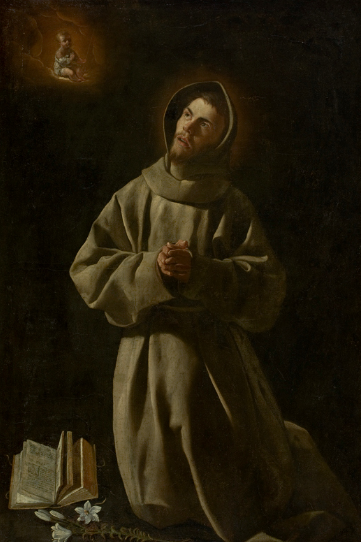
St. Anthony of Padua, Confessor and Doctor of the Church
1. Anthony was born in Lisbon, Portugal, in 1195, and he joined the Augustinians at the age of fifteen. In order to escape frequent visitors he asked for a transfer and was sent to Coimbra. There he lived in seclusion for eight years, devoting himself to prayer and severe mortification and to the study of Holy Scripture and the Church Fathers. Then he obtained permission to transfer to the Franciscans, hoping he would merit to be sent to a martyr’s death in Africa. Arriving in Africa, he immediately became so ill that he had to set sail for Spain again. His ship was driven by storms to the coast of Sicily, and from there Anthony made his way to the general chapter in Assisi; here he obtained the blessing of St. Francis, who sent him to a small monastery in Bologna. Here he was put to washing dishes and sweeping floors.
By accident Anthony’s talent for preaching and for guiding souls was discovered, and he was sent to northern Italy and to France to oppose the Waldensians and the Albigensians. His success was sensational, due to miracles he wrought. Sent to Padua in 1227, he checked heresy and internal unrest and brought an end to want and misery by a long series of miracles and good deeds. His entire day was spent in preaching, hearing confessions, visiting the sick, settling family disputes, and instructing children, while his nights were devoted to prayer. In the spring of 1231 he became ill, and on June 18 he died, with an ecstatic smile on his face and these words on his lips: “I see our Lord.” His short life of thirty-six years had been an extremely fruitful one in good works and personal sanctity, and he was canonized the year after his death; his title of “Doctor of the Church” came much later, in 1946 .
2. “Preach the word, dwelling upon it continually, welcome or unwelcome; bring home wrong-doing . . . rebuke the sinner, with all the patience of a teacher . . . . It is for thee to be on the watch . . . to employ thyself in preaching the gospel, and perform every duty of thy office, keeping a sober mind” (Epistle). For many years Anthony’s gifts were not recognized by his brethren, and he was assigned to all the menial monastic duties. He always obeyed humbly, and showed no concern about anything other than his familiar, prayerful intercourse with God. On one occasion the Father Guardian chose him as his companion for a visit to the Dominicans at Forli. After supper their hosts begged him to say a few words for their edification, and the Guardian bade Anthony to comply with their request. Whereupon Anthony delivered such a forceful and luminous discourse that all were amazed.
When this incident came to the ears of St. Francis, he sent Anthony to study theology at Vercelli, and later assigned him the task of teaching the science of God to young Franciscans in various cities of Italy. When he later preached against heresy in France, he roused the Catholics with such supernatural force and fervor that they left towns and farms to hear him and confess to him. With ardent charity and unbelievable boldness he told the truth to high and low, mighty and weak, rich and poor, faithful and heretical; and ultimately he overcame opposition in all minds and hearts.
“You are the salt of the earth . . . the light of the world” (Gospel). Anthony was, indeed, a great light, dispelling the darkness of his time. He was a light in his preaching, a light in the abundance of his grace and sanctity, a light in the number and greatness of his miracles. In Bimini, a hotbed of heresy, the people had decided not to listen, lest they be converted in spite of themselves by his irresistible words; so St. Anthony found no audience waiting when he mounted the pulpit. He thereupon went to the seashore and preached toward the sea. The people thought he had gone mad. Then they saw that vast numbers of fish had come and were listening. Now they could no longer resist St. Anthony, and returned to the Church.
When St. Anthony preached in Rome he renewed the miracle of Pentecost; all—the Spaniards and Germans as well as the Italians—heard him speaking their own languages. In 1227 he was sent to Padua, recently fallen a prey to heretics, and soon all were so eager to hear St. Anthony preach that they rose in the night to assure themselves of places in the next day’s audience. Such an uproar silenced the heretics, and they were won back to the Church. Never resting, St. Anthony pushed on.
St. Anthony had received good training for his great works. From the time he was sent to Morocco and was forced to give up his missionary dreams on account of sickness, through the years of convalescence and domestic tasks in Italy, to the end of his theological studies, there were always trials and humiliations. He always recognized and accepted the will of God in everything that happened, however, and was satisfied with the lowest place. God gives His grace to the humble, and He was able to accomplish marvelous results in St. Anthony’s case.
Collect: O God, may the devout commemoration of Thy blessed confessor and doctor Anthony fill Thy Church with joy. May her children, with the constant help of spiritual powers, become worthy to enjoy everlasting bliss. Amen.
(Benedict Baur)
_____________________
PLAIN TALKS ON MARRIAGE
FULGENCE MEYER , O.F.M.
(1954)
CHAPTER VIII.
Husband and Wife
“Let everyone of you in particular love his wife as himself: and let the wife fear her husband” (Eph., 5, 33).
A WORD remains to be said anent the relations between man and wife in general. They can not be depicted in a nicer and more appealing manner than in the words of St. Paul which are read in the epistle of the nuptial Mass: “The husband is the head of the wife, as Christ is the head of the Church . . . Therefore as the Church is subject to Christ, so also let their wives be to their husbands in all things. Husbands, love your wives, as Christ also loved the Church, and delivered Himself up for it . . . So also ought men to love their wives as their own bodies. He that loveth his wife, loveth himself. For no man ever hated his own flesh; but nourisheth and cherisheth it, as also Christ doth the Church” (Eph., 5, 23 sqq.), In sacred intimacy and in sweet, blissful and prolific love no union has equaled that of Christ and His Church. The apostle desires married people should copy this union and its happiness in their conjugal life. They will do this by imitating Christ and His Church, respectively.
The Grandest Love
“Husbands, love your wives, as Christ also loved the Church.” Christ loved and loves but one Church. He concentrates upon her exclusively. Whatever He thinks, plans or schemes; whatever He says, does and ordains; whatever He bears, suffers and endures: it is all for His one Church. All His love, affection, devotion and consecration are focused on her. Not once has His love wavered, faltered or hesitated. Not once was it ever tempted to consider strange charms or measure foreign lures. There have been many rivals of the Church for the patronage and love of Christ; many went so far as to assume His Name and go under His pretended protection: but they never received His attention or attachment for a single moment, and they went to naught in consequence. He knew and recognized and loved but one Church, and He was unapproachable to, and intolerant of, any and every one of her competitors for His love.
In a similar manner a good Catholic husband will love his wife. He will devote himself to her, exclusively of every other woman, with his whole heart, and his whole soul, and his whole mind, and with all his strength. She will possess all his love and his entire affection. Whatever he thinks or says, plans or desires, ambitions or executes: everything aims to please his wife, and to render her existence happy and sweet. In this concentration he never weakens, nor is he ever distracted from it by any strange feminine charms or vampish fascinations. He gives these no chance to function in his regard, because of his being altogether and irrevocably riveted to the wife of his bosom, his heaven-given mate, companion, sweetheart and friend.
True Love Never Dies
The love of Christ for His Church was and is imperturbably constant and lasting. He loved the Church not only in the beginning, when she was a novelty, and when she was fresh, interesting and charming with youthful enthusiasm for, and heroic devotion to, Him: but He loved her just the same later on when she began to show evidence of the weaknesses of the human element within her; when her members became disunited and often grew variously tainted and contaminated with sin and vice: then, too, He abided with her in unfailing love, unswerving attachment and saving protection. He loves His Church today, nineteen hundred years after His mystic espousals with her, as much as He ever loved her, without the least diminution of ardor or deflection of love.
In like manner a good Catholic man loves his wife not only in the first period of marriage, when she, is young, beautiful, sprightly, vivacious and generally charming, and when their union still has the spice of novelty and freshness: but he will love her as much or even more as years wear on, and when she begins to discover the weaknesses of her sex and the foibles of her character, which he perhaps never suspected, and by the extent of which he is considerably surprised and, in a way, disappointed. Yet this disappointment in no way affects or decreases his love for her: on the contrary, if anything, her very faults and shortcomings bring out his love in its best, most unselfish and heroic manifestations. This is particularly verified when his wife suffers a serious illness or some similar misfortune. Her weakness or adversity becomes the triumph of his love, even as our Lord’s love for His Church showed to best advantage in the times of her trials and persecutions.
Love Is Operative
Christ loved His Church with a real, actual and practical love. His love did not merely consist of sweet phrases, endearing terms, and glowing professions of love; but it showed itself in His entire conduct, in reality and in deed. Whatever He undertook or performed: His preaching, His miracles, His example of holiness, His endowing the apostles with power from on high, His death on the Cross, His resurrection, His ascension, His sending of the Holy Ghost: everything was a substantial rendition of love for His Church. And throughout the ages His active assistance and protection of her never cease or lessen in force and effectiveness.
So, too, must be a good Catholic man’s love for his wife. Whilst he will not fail to give her again and again, with loving prudence, the tender professions of attachment and devotion a woman naturally craves and enjoys from the object of her love: he will be careful to back up these professions with continuous exhibitions of real service and practical sacrifice inspired by his love for his wife. All his labors and toils, all his endurance and patience, all his plans and designs, in his work, trade, profession or business aim to please her, and to render her life discreetly easy, comfortable and enjoyable. Just so she is happy he does not mind how much he has to work, sweat, suffer and endure: even as Christ shrank from no labor or sacrifice in the interest of His Church.
This is the ideal relation of a husband towards his wife. Perfection is seldom, if ever, realized by mere men on this earth. Consequently men are known to sin variously against this ideal of marriage also. Yet it must be owed to their credit, that by far the majority of our Catholic husbands strive earnestly to meet the full requirements made upon them, and this with a considerable amount of success, all allowance being made for the native infirmity of human nature. Some husbands, however, fall pitiably short of the ideal through their own fault.
The False Husband
Here we meet first of all the disloyal husband. Not content with the one wife, to whom in the presence of God, angels and men, he solemnly swore exclusive and undying love and attachment, he goes after strange and adulterous loves, usually to the ruination of his own and his wife’s happiness. For a vicious and short-lived sensuous gratification he is willing to jeopardize and forfeit the sweetest and most precious thing this life contains for an honorable man: the abiding trust and encompassing love of a good woman. He is like a man who prefers a deadly drug to wholesome food: with similar results as to his life’s happiness and peace. “The deceitful man shall not find gain: but the substance of a just man shall be precious gold. In the path of justice is life: but the by-way leadeth to death” (Prov., 12, 27, 28).
The Drunkard and Gambler
There are other married men who wreck the happiness of their married life through brutish selfishness which usually takes the form of drunkenness. Nothing must come in the way of their beastly self-indulgence. All considerations for the welfare, peace and comfort of the wife are mercilessly and ruthlessly sacrificed to it. The well-known story of the drunkard’s dream illustrates the havoc this terrible vice plays with what married life holds dearest and best. A man given to drink related at the breakfast table one morning, that he had had a bad dream during the night. He saw four rats. One was very fat and bloated; another was blind; while the remaining two were very lean and weak. He wondered what a dream like that could mean. His little son of twelve years, who was seated at the breakfast table with his mother and father, said naively: “Papa, that’s easy. I know what that dream means. The big fat rat is the bootlegger from whom you buy your booze. Mama and I are the lean and weak rats, for we have hardly enough to eat to keep us alive. The blind rat is yourself, for if you were not blind to your well-being and ours, you would never drink as you do.” Here, too, in every case, “the wages of sin is death” (Rom., 6, 23).
What is true of drunkenness, applies with proportionate force to the vice of passionate gambling, which sometimes suddenly, and as a rule ultimately, involves the most promising and the sweetest marital unions in catastrophe and disgrace.
The Selfish Husband
Finally some married men, although not given to adultery, drink, or gambling, fail miserably as husbands because of a violent and uncontrollable temper, which inclines them to be rude and very abusive to their wives at times; or because of a temperamental coldness and indifference, by reason of which they are self-centered and self-satisfied; they show no sympathy for, or interest in, the wife’s conditions, occupations, needs and desires; they either do not reflect that she is of a different sex, and may be of a different temperament than they, or they do not care if she is or not; they are not going to put themselves out a particle to please her, or even to meet her half way towards a mutual understanding and a tolerable living relation. They want to be left alone, and they despise anything smacking of emotionalism or sentimentality in their married life. All they desire in the way of marriage is to use the wife to satisfy their sexual passion when they feel an inclination for it; but she must never expect that they are ever going to exhibit her any tenderness, affection or endearment, flowing from a personal love or regard for her. All of this is beneath them, and the mere thought of it disgusts them. They are selfishness incarnated, and do not deserve the name of husband. Their conduct is the very antithesis of the injunction of St. Paul: “So also ought men to love their wives as their own bodies . . . For no man ever hated his own flesh; but nourisheth and cherisheth it, as also Christ doth the Church” (Eph., 5, 28, 29). If the wife, rebelling against so unfair and mean a treatment, reciprocates by leaving such a husband severely alone, and by divesting herself of all concern about his person and affairs, he is merely getting what he deserves.
The Miser Husband
To this class must be added the miserly husbands, who treat their wives, as far as the economy of the house is concerned, as mere domestics or, rather, as slaves. They give them barely enough money to conduct the household decently, and even this money the wives must beg and plead for with great humiliation and confusion. No domestic would put up with such a situation; but since the wife is bound by her sacred marriage vows these unfeeling husbands abuse her and degrade her to a condition of servitude. On the outside they may make a show of generosity and magnanimity, merely to be the more tyrannical and niggardly to the one who has the strongest claim upon their attention and liberality. Far from being big men, these tyrants are the meanest and vilest of slavedrivers. In consequence of their miserliness they never know the sweetest experience of a married man: the spontaneous and wholehearted love, respect and admiration of a good and devoted woman.
Honey versus Vinegar
It is as far removed as it can be from the Christian conception to consider the wife as a mere chattel that can be dealt with at the caprice and whim of the husband. She is a co-partner in the marriage contract, entitled to equal rights and privileges as the husband. By attending to her duties as wife and mother she has a claim to a respectable and becoming living, not of a slave or even of a child, but of a coordinate member of the matrimonial firm. She should therefore be given as liberal an allowance for the household as the income of the family permits, and she should be at liberty to dispose of it according to her own discretion without any duty of accounting for expenditures, and more still, without any sleuthing, bickering or faultfinding on the part of her husband. The more margin is allowed the wife in the management of the house, the better is it likely to be handled. According to St. Francis de Sales more flies are caught with one drop of honey than with a barrel of vinegar; similarly much more is achieved by an ounce of love than by a ton of surliness and boorishness. This is particularly applicable to the relation of marriage in which love is or at least ought to be more at home and in its peculiar domain and power than anywhere else in life.
————————-
Father Krier will be in Pahrump (Our Lady of the Snows) on June 10. On June 15 he will be in Albuquerque, New Mexico (Saint Joseph Cupertino). He will be in Eureka, Nevada (Saint Joseph, Patron of Families), June 22.
————————-
The topics of Faith and Morals will correspond to the Roman Catholic Faith in Tradition and the Magisterium. The News will be of interest. The commentaries are for the reader to ponder and consider. The e-mail address will be for you to provide thought for consideration. The donations will be to support the continuation of this undertaking.
While the Newsletter is free of charge it is not free of cost. Please consider supporting St Joseph’s Catholic Church with a tax – deductible donation by clicking the secure link: Donate
Or if you prefer send a check to
Catholic Tradition Newsletter
c/o St Joseph’s Catholic Church
131 N. 9th St
Las Vegas, NV 89101
Visit us on the Worldwide Web: http://stjosephlv.org
e-mail news and comments to: tcatholicn@yahoo.comTo unsubscribe, please type, “unsubscribe”‚ in subject line.…