Vol 12 Issue 12 ~ Editor: Rev. Fr. Courtney Edward Krier
March 23, 2019 ~ Lenten Feria
1. What is the Sacrament of Confirmation
2. Third Sunday in Lent
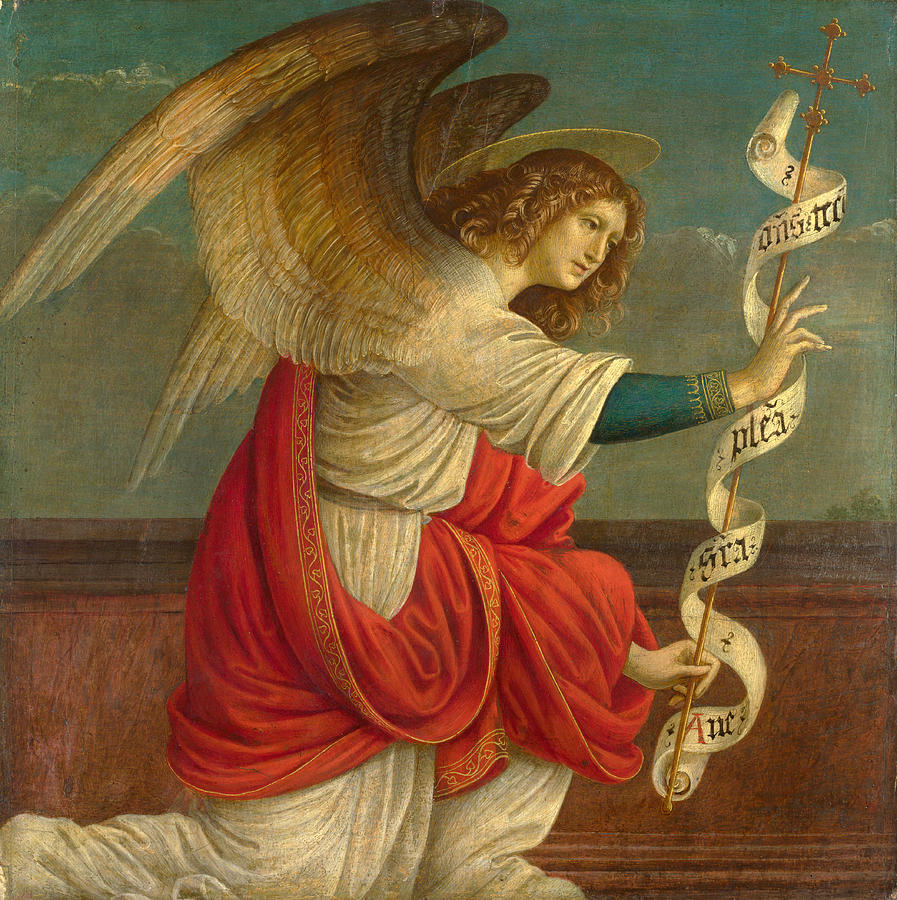
3. Saint Gabriel, Archangel
4. Family and Marriage
5. Articles and notices
Dear Reader:
It is still the month of Saint Joseph, so I want to continue the reflection on his life in this issue, too.
Luke informs the reader: And the child grew, and waxed strong, full of wisdom; and the grace of God was in him. (Luke 2:40)
Under the care of Saint Joseph, the Child Jesus would live a life that was seemingly just like every other Jewish child’s life at that time—for no one took any special notice of the holy Family while they dwelt in Nazareth. Joseph, being a carpenter, found sufficient work in the small town. He would attend the Synagogue every Sabbath and every year would fulfill the religious obligation of going to the Temple for the major feasts of Passover, Pentecost and Sukkoth: And his parents went every year to Jerusalem, at the solemn day of the pasch (Luke 2:41). A Jewish boy would begin preparing for his bar Mitzvah when he was twelve, learning the passage he was to read. It would be appropriate for him to ask the local rabbi or the teachers in the temple questions. When they reached their thirteenth birthday, they would read the passage selected in a public ceremony, which then gave them the right to participate in the Synagogue services with the men and be under the law. Bar Mitzvah means son of the law. It would not be, therefore, unusual that at the festival of the Passover a boy of twelve would ask the doctors of the law questions so he could demonstrate his understanding of the law (Torah) on the occasion of his Bar Mitzvah.
And when he was twelve years old, they going up into Jerusalem, according to the custom of the feast. And having fulfilled the days, when they returned, the child Jesus remained in Jerusalem; and his parents knew it not. And thinking that he was in the company, they came a day’s journey, and sought him among their kinsfolks and acquaintance. And not finding him, they returned into Jerusalem, seeking him. (Luke 2:42-45)
There is no simple explanation to the event of the Child being left behind in Jerusalem other than to provide an example to both children and parents. At twelve, the Child Jesus could travel with the women or with the men (the separation of men and women was strict especially when one views the fact that there were no places to accommodate bathing or the relieving of oneself in private. The assumption that the Christ Child would be with either Joseph or Mary would have been within the bounds of their knowing Who the Child Jesus is: Responsible and incapable of disobedience. The confusion accompanying the age of the Child and into whose care He would be now indefinite, Joseph and Mary found themselves confronted with the boy Jesus being left in Jerusalem—perhaps in everyone leaving the Temple, He stayed praying to His heavenly Father. Joseph and Mary immediately, upon the discovery of His absence do not rest but continuously seek the Child Jesus until, retracing their steps, they find Him in the Temple:
And it came to pass, that, after three days, they found him in the temple, sitting in the midst of the doctors, hearing them, and asking them questions. And all that heard him were astonished at his wisdom and his answers. And seeing him, they wondered. And his mother said to him: Son, why hast thou done so to us? behold thy father and I have sought thee sorrowing. And he said to them: How is it that you sought me? did you not know, that I must be about my father’s business? And they understood not the word that he spoke unto them. (Luke 2:46-50)
The natural anguish that Joseph and Mary would have felt is expressed in the words: Son, why hast thou done so to us? behold thy father and I have sought thee sorrowing. Children are confronted sometimes when their parents give contradictory commands and, in obeying one, seemingly disobey the other. The heavenly Father commanding His Son to remain and provide the teachers of the law the opportunity to seek God through the law; His earthly father and mother expecting Him to be with them. Everyone now understanding that His Father was God, and that He must do the will of His Father. But, He also has His earthly parents, of whom Saint Joseph is responsible for His care. Venerable Bede states: Not that He chides them for seeking Him as a son, but rather He compels them to raise the eyes of their mind to what is due to Him of Whom He is the Eternal Son. Hence: Did you not know, that I must be about my Father’s business? (On Luke)
Joseph would have told Jesus He was to return with them and, accepting the Will of His eternal Father by being subject to an earthly father, the boy Jesus went with them. The Doctors of the Law must have been impressed and seeing the parents wearing the simple clothes of the Galileans, had to all the more ponder the responses this Child gave: And he went down with them, and came to Nazareth, and was subject to them. And his mother kept all these words in her heart. And Jesus advanced in wisdom, and age, and grace with God and men. (Luke 2:51-52) These last words, a restatement from when Joseph first took Mary and the Child to Nazareth, place Jesus, as a young man, in the direction and training of His foster-father. And they said: Is not this the carpenter’s son? (Matt. 13:55) Is not this Jesus, the son of Joseph, whose father and mother we know? (John 6:42; cf. Luke 4:22) The skill of Joseph as a carpenter must have been renowned—and surely with the help of his foster-Son, must have produced fine work, for Philip, too, introduces Jesus to Nathaniel in these words: We have found him of whom Moses in the law, and the prophets did write, Jesus the son of Joseph of Nazareth. (John 1:45) It indicates that His carpentry shop must have been missed—speculating that Joseph died in the arms of Jesus and Mary shortly before Jesus started His public life.
As always, enjoy the readings and commentaries provided for your benefit. —The Editor
________________
WHAT IS THE SACRAMENT OF CONFIRMATION?
by Rev. Courtney Edward Krier
A CATECHISM FOR CONFIRMATION
By John J Morris (1955)
Lesson 10 The Ceremonies of Confirmation in English
I. As the procession of the priests and Bishop comes into the church, the choir sings a hymn. After the Bishop enters the sanctuary, he genuflects and kneels in the center of the sanctuary. When he has finished saying a few prayers, he will rise, and turn to give a short talk. After the talk is completed, he will put on an amice, stole, and white cope. The miter is placed on his head. Then he will either remain standing or be seated on a chair before the middle of the altar, facing the people, his back to the altar. There he washes his hands.
II. When the miter is taken by the assistant priest, the Bishop stands and goes to the platform of the altar. There he faces those who are to be confirmed. The Bishop has his hands joined, and those to be confirmed are kneeling with their hands joined in front of them. The Bishop now says in a loud voice:
“May the Holy Ghost descend upon you, and may the power of the Most High preserve you from sin.”
Priests answer; “Amen.”
Then signing himself with the Sign of the Cross, he says;
“Our help is in the name of the Lord.”
Priests answer: “Who made heaven and earth.”
Bishop: “Lord, hear my prayer.”
Priests: “And let my cry come unto Thee.”
Bishop: “The Lord be with you”
Priests: “and with thy spirit.”
III. With his hands extended over those to be confirmed, the Bishop says:
“Let us pray: Almighty and Eternal God, Who has deigned to bring these Thy servants by water and the Holy Ghost to a new life, and has given them the forgiveness of all their sins; send forth from heaven upon them Thy sevenfold Spirit, the Holy Paraclete.
Priests: “Amen”
Bishop: “The Spirit of Wisdom and Understanding.”
Priests: “Amen”
Bishop: “The Spirit of Counsel and Fortitude”
Priests: “Amen”
Bishop: “The Spirit of Knowledge and Piety.”
Priests: “Amen”
Bishop: “Fill them with a Spirit of thy Fear, and sign them with the Sign of the Cross + of Christ, in thy mercy, unto life everlasting. Through the same Jesus Christ, Thy Son, Our Lord, Who liveth and reigneth with Thee in the unity of the same Holy Ghost, God, world without end
Priests: “Amen”
IV. Those to be confirmed now stand and go immediately to the altar or communion rail. If the number to be confirmed is small, the Bishop will be seated on a chair at the altar. If there is a large number, he will usually go to the communion rail, and administer the Sacrament.
First he is told the name that each is taking for Confirmation, by the Deacon or the master of ceremonies. Then he dips the tip of his right thumb in the Holy Chrism and says:
(He mentions the name of the saint) “I sign thee with the sign of the Cross”
While saying these words the Bishop makes the sign of the Cross with his thumb on the forehead of the person being confirmed, and then continues:
“And I confirm thee with the chrism of salvation. In the name of the Father + and of the Son + and of the Holy + Ghost.”
Here he makes the sign of the Cross three times over the head of the one confirmed.
Priest answers: “Amen”
V. Next the Bishop slaps the one confirmed lightly on the cheek, and says: “Peace be with you.”
VI. When all have been confirmed, the Bishop wipes the Holy Oil from his fingers with lemon and bread, and finally washes them with water. While he is doing this the choir is singing:
“Confirm, O God, that which Thou has wrought in us, from Thy holy Temple which is in Jerusalem.
“Glory be to the Father, and to the Son, and to the Holy Ghost. As it was in the beginning, is now and ever shall be world without end. Amen.
VII. After the “Confirm, O God,” is repeated, the miter is taken from the Bishop. He then stands and faces the altar, with his hands joined before him and says:
“Show thy mercy unto us, O Lord.”
Priests answer: “And grant us Thy Salvation.”
Bishop: “Lord hear my prayer.”
Priests: “And let my cry come unto thee.”
Bishop: ‘The Lord be with you.”
Priests: “And with thy spirit.”
VIII. The Bishop with his hands still joined before him, and all those who have been confirmed kneeling in their places, says
“O God, who didst give to Thine apostles the Holy Ghost and didst will that by them and their successors He should be given to the rest of the faithful; look mercifully upon our lowly service grant that the hearts of those whose foreheads we have anointed with Holy Chrism, and signed with the Sign of the Holy Cross, may, by the same Holy Spirit, coming down upon them, and graciously abiding within them, be made the temple of His glory. Who with the Father, and the same Holy Ghost, livest and reignest, God world without end.
Priests: “Amen”
Bishop: “Behold, thus shall every man be blessed that fears the Lord”
IX. Then turning to those who have been confirmed, he blesses them saying;
“May the Lord bless you out of Sion, that you may see the good things of Jerusalem all the days of your life, and have life everlasting.”
Priests: “Amen”
At this point the Bishop may say few words, but he will always give the penance. He will ask all those confirmed to say out loud the Apostles’ Creed, the Our Father, and the Hail Mary.
Benediction of the Most Blessed Sacrament usually follows immediately.
Lesson 11 CONFIRMATION PROMISES
What promises should you make to God the Holy Spirit after you are confirmed?
I should make these promises to
-have a greater love for God the Holy Spirit.
-study my catechism with more love and understanding.
[If I am going to tell others of God and His teachings, I must understand them well myself.]
-do all that Christ and His Church tell me to do.
-practice my religion faithfully, as a good solider of Jesus Christ.
-go to mass every Sunday, even when the weather is bad.
-be faithful in giving up meat on Friday and on other days the Holy Catholic Church commands.
-obey the pope, the bishop, my pastor, parents, and all others who have been over me.
-practice my religion even though others may say mean things about me.
-be a witness for Jesus Christ. This means that I promise to tell others about Jesus. By my words and actions I will help non-Catholics learn about the one, true Church. You will receive power when the witness…even to the ends of the Earth.
(To be continued)
————————–
The Sunday Sermons of the Great Fathers
M. F. Toal
THE GOSPEL OF THE SUNDAY
Luke xi. 14-28
At that time Jesus was casting out a devil, and the same was dumb: and when he had cast out the devil, the dumb spoke: and the multitudes were in admiration at it: But some of them said: He casteth out devils by Beelzebub, the prince of devils. And others tempting, asked of him a sign from heaven. But he seeing their thoughts, said to them: every kingdom divided against itself, shall be brought to desolation, and house upon house shall fall. And if Satan also be divided against himself, how shall his kingdom stand? because you say, that through Beelzebub I cast out devils. Now if I cast out devils by Beelzebub; by whom do your children cast them out? Therefore they shall be your judges. But if I by the finger of God cast out devils; doubtless the kingdom of God is come upon you. When a strong man armed keepeth his court, those things are in peace which he possesseth. But if a stronger than he come upon him, and overcome him; he will take away all his armour wherein he trusted, and will distribute his spoils. He that is not with me, is against me; and he that gathereth not with me, scattereth. When the unclean spirit is gone out of a man, he walketh through places without water, seeking rest; and not finding, he saith: I will return into my house whence I came out. And when he is come, he findeth it swept and garnished. Then he goeth and taketh with him seven other spirits more wicked than himself, and entering in they dwell there. And the last state of that man becomes worse than the first. And it came to pass, as he spoke these things, a certain woman from the crowd, lifting up her voice, said to him: Blessed is the womb that bore thee, and the paps that gave thee suck. But he said: Yea rather, blessed are they who hear the word of God, and keep it.
EXPOSITION FROM THE CATENA AUREA
V. 14. And he was casting out a devil, and the same was dumb.
GLOSS: The Lord had just promised that the Good Spirit would be given to them that ask him; whose goodness He reveals to them by the following miracle; hence we have: And He was …
THEOPHYLACTUS: Kophos, which the Latins translate by mutus (dumb) is a term used to describe a dumb man; it is also used to describe one who does not hear; but more correctly it means one who can neither hear nor speak. If a man cannot hear from birth, of necessity he will be dumb. For we only speak that which we have learned to say through hearing. Should he through some misfortune lose his hearing, this will not prevent him from speaking. But the man who was brought to the Lord was both deaf and dumb.
TITUS BOSTRENSIS in Matt. Cat. G.P: Because it is he who inflicts this infirmity, so that the word of God may not be heard, it is the devil whom he calls a dumb spirit, or a deaf one. For the demons by taking away the natural power of the senses, interfere with the hearing of the soul; and so Christ comes, both that He may cast out the devil, and that we may hear the word of truth. For He heals one man, so that He may give to all men a foretaste of human salvation. Hence there follows: And when He . . .
BEDE: But in Matthew it is recorded that the possessed man was blind as well as dumb. Three wonders therefore were wrought in this one man: the blind was given sight, the dumb speaks, and he that was possessed was delivered of an evil spirit. This is daily renewed in the conversion of the faithful; for being first freed of a demon they then look upon the Light of the Faith, and their lips that before kept silence are now opened in praise of God.
CYRIL: When He had worked this wonder the multitudes were filled with awe, and they began to extol Him with such praise as belonged to God. Hence: The multitudes were in admiration of him. The multitudes, who appear to have been but poorly instructed, were ever in admiration of what He did, but the Scribes and Pharisees sought rather to contradict Him and to twist the significance of His wonders by a perverse interpretation: as though they were not the works of God but of an evil spirit. Hence we have:
V. 15. But some of them said: He casteth out devils by Beelzebub.
Beelzebub was the god of Acheron: for Beel is actually Baal. Zebub means ‘of the flies’. He is called Beelzebub, Lord of the Flies, from the foul office which they were wont to attribute to the prince of the demons.
V. 16. And others tempting him, asked of him a sign from heaven.
CYRIL, Catena G.P: Some others, urged on by the sharp goad of envy, sought of Him a sign from heaven. As though they said: ‘Although you cast forth a demon from a man, that is no sign of a divine work. For we have not seen from you any sign like to those of former days. Moses led our people through the midst of the sea. Josue his successor held the sun back before Gabon. But you have done no such wonders.’ That they sought a sign from Him indicates that they were thinking such thoughts about Christ.
V. 17. But He seeing their thoughts, said to them …
CYRIL, Catena G.P:1 The Pharisees dared not reveal their suspicions to the multitudes, since they were so unfounded. But they turned them over in their minds. Hence we have: But He seeing their thoughts . . . said: Every kingdom divided against itself . . .
BEDE: He gave an answer, not to their words, but to their thoughts, so that by this they should be compelled to believe in His power Who could read even the secrets of the heart.
CYRIL, as above: He did not answer them from the Scriptures: for they paid no heed to them, except to interpret them falsely: but He answers them from circumstances which are common among men. For a house or a city that is divided within itself soon falls to nothing; and the same is true of a kingdom: though there is nothing seems so strong as a kingdom. But on the other hand concord gives strength to kingdoms, and to the homes of their subjects. If I then by the aid of a demon cast out demons there is division among them, and their power is passing away. Hence:
V. 18. And if Satan also be divided against himself . . .
For Satan does not war against himself. Neither does he oppose his own accomplices; rather does he uphold what is his own dominion. It follows then that it must be by divine power that I cast down Satan.
AMBROSE: By this also does He show that His own Kingdom is indivisible and everlasting; and so He declares that they do not belong to His everlasting kingdom who do not place their hope in Christ, but believe He casts out demons by the prince of demons: which applies to the Jewish people also. For how can the kingdom of the Jews be everlasting when Jesus Who was begotten under the Law is rejected by the people of the Law? So in part the belief of the Jewish people turns on itself, and so doing becomes divided, and being divided is brought to nothing. But the Kingdom of the Church shall remain for ever, because the whole Church is one body.
BEDE: Neither is the Kingdom of the Father, Son, and Holy Ghost divided for it will endure in eternal unchangeableness. Let the Arians cease then from saying the Son is less than the Father, and the Holy Spirit less than the Son; for Their Kingdom is One, and One Their divine majesty.
CHRYSOSTOM, Hom. 42 in Matt.: This is the first answer. He then gives the second: which refers to His Disciples. He says to them:
V. 19. Now if I cast out devils by Beelzebub, by whom do your children . . . ?
He does not say, My Disciples, but your children (i.e. sons): wishing to soften their anger. CYRIL: For the Disciples of Christ were Jews, and born from Jews according to the flesh. And from Christ had they received power over evil spirits; and those who were oppressed by them they delivered in His Name. Since therefore your sons crush Satan in My Name, is it not grievous folly to say I hold My Power from Satan? Let you be judged by the faith of your own sons. Hence: Therefore they shall be your judges. CHRYSOSTOM: Since they though sprung from you obey Me it is evident they will condemn those who are contrary to Me.
BEDE: Or, He means by, your children, the exorcists of their own people who cast out devils by the invocation of the Name of God; as though saying: If the casting forth of evil spirits wrought by your sons is due to God, and not to the power of demons, why then has the same result wrought by Me not the same cause? Therefore they shall be your judges, not by the exercise of authority, but because of the comparison; for they attribute the casting forth of the evil spirits to the power of God, you to Beelzebub the prince of the evil spirits. CYRIL: Seeing what you say is tainted with calumny it is then evident that it is by the Spirit of God that I cast out evil spirits.
V. 20. But if I by the finger of God cast out devils; doubtless the kingdom . . .
AUGUSTINE, Harm. of the Gospels, 2, 3 8: That Luke says by the finger of God, where Matthew says by the Spirit of God, does not imply that he does not mean the same thing; rather he adds something: that we may learn in what way we are to understand the finger of God when we meet it in the Scriptures.
AUGUSTINE, Quaest. Evangel., 2, 17: The Holy Ghost is called the Finger of God because of the distribution, wrought by Him, of the gifts each one receives: whether men or angels: for by none of our members is distribution more indicated than by the fingers. CYRIL, Catena Pat. Graec., 13, 2: Or, the Holy Ghost is called the Finger of God because the Son is called the Hand and Arm of God; for by Him the Father does all things. As the finger therefore is not separated from the hand, but is joined naturally to it, so is the Holy Ghost joined consubstantially to the Son, and through Him the Son does all things.
AMBROSE: Nor must you assume, because of this comparison, that He possesses but a portion of the divine power; for there is no division of an indivisible thing, and accordingly the term is to be used to refer, not to a division of power, but to the nature of the divine unity.
ATHANASIUS, Contra Arianos, Or. 2: Here the Lord in virtue of His humanity refuses not to declare that He is less than the Holy Ghost, saying that it was by the Holy Ghost He cast out devils; as if to say: human nature, unaided by the Holy Ghost, is not sufficient to cast out evil spirits.
CYRIL: And so fittingly is it said, The kingdom of God is come upon you; that is, if I, being a man, cast out devils by the power of the Holy Ghost, in Me human nature is enriched, and the kingdom of heaven is come.
CHRYSOSTOM: He says, upon you, that He may draw them to Him. As though to say: if favourable things come to you, why do you question good fortune?
AMBROSE: At the same time He shows that the power of the Holy Ghost, in which is the kingdom of God, is imperial so to speak. We also, in whom the Holy Spirit dwells, are a kingly habitation.
TITUS: Or He says: The kingdom of heaven is come upon you so that it may be understood that it has come against you, not for you: for the Second Coming of Christ must be dreaded by all who do not believe.
———————–
MARCH 24
St. Gabriel the Archangel
1. On the day before the feast of the Annunciation the Church celebrates the memory of the Angel who, according to the Gospel story, was sent to Zachary, future father of John the Baptist, to announce to him the good news (cf. Luke 1:18). Six months after the conception of John, the Archangel was sent by God to a town of Galilee by the name of Nazareth, to a Virgin (cf. Luke 1:26), in order to announce to her the mystery of the Incarnation, which was about to be accomplished in her. This is the same Gabriel who, many centuries earlier, had foretold the Incarnation to Daniel in a mysterious manner (cf. Dan. 8:15-9:21 ff.). In the liturgy of the Church Gabriel is called an archangel; he has been honored in both Eastern and Western Christendom from the earliest times. Since 1921 the feast is celebrated in the universal Church.
2. “At this time: God sent the angel Gabriel to a city of Galilee called Nazareth, where a virgin dwelt . . . and the virgin’s name was Mary. Into her presence the angel came and said: Hail, thou art full of grace; the Lord is with thee; blessed art thou among women. . . . Then the angel said to her, Mary, do not be afraid; thou hast found favor in the sight of God. And behold thou shalt conceive in thy womb, and thou shalt bear a son, and shalt call him Jesus. He shall be great, and men will know him for the son of the Most High” (Gospel; Luke 1:26 ff.). Gabriel was commissioned to indicate to the Prophet Daniel the great world-kingdoms that were destined to prepare the way for the Messias and form the foundation for His kingdom. Under the figure of “seventy weeks” he specified the time of the coming of Christ. And when the Son of God appeared it was again Gabriel who proclaimed to men that most important and most sublime message. Now the promise to Daniel was to be fulfilled; sin was to be blotted out; justice and everlasting peace restored (cf. Dan. 9:24). Just as formerly a fallen angel in Paradise had betrayed man into the guilt of sin, so Gabriel, the faithful Angel, the “Strong one of God,” was to cooperate in the salvation of mankind. He is a faithful messenger, one of the number of those of “sovereign strength, that carry out His commandment” (Introit). We congratulate the holy Angel on his privilege of announcing the Incarnation (cf. Collect).
“The Angel of the Lord announced unto Mary, and she conceived of the Holy Ghost.” The Angel descended from heaven and appeared to the Virgin, in the name of the Most High. He greeted her with deep reverence and esteem. With holy zeal, he spoke to her and declared to her the mystery by which she should become Mother of the Son of God without sacrificing her virginity. He told Mary that the Holy Spirit would come upon her and accomplish the mystery of the Incarnation in her. He assured her of the glory of the divine motherhood and the greatness and excellence of the Child that she would conceive and bring forth: “He shall reign over the house of Jacob eternally; His kingdom shall never have an end” (Gospel). He informed her of the miracle that the omnipotence of God had wrought in her cousin Elizabeth, assuring her that “nothing can be impossible with God.” In this way Gabriel brought the humble Virgin to her counter-question: “How can that be, since I have no knowledge of man?” Finally, her answer to his proposal from God: “Behold the handmaid of the Lord; let it be unto me according to thy word.” “And the Word was made flesh, and came to dwell among us” (John 1:14). But this blessed event had been dependent on the consent of the Virgin and upon the obedience of Gabriel in the task that God had assigned to him of bringing the message to Mary. Should we not honor this fidelity of St. Gabriel and thank him for bringing us the good news of our Redemption? He is surely an example for us in his reverent attitude toward the Virgin.
3. “We … entreat Thy clemency that Gabriel, whose message brought us knowledge of Thy Incarnation, may help us to obtain its fruits” (Postcommunion), particularly in our reception of Holy Communion.
The salutation of the Angel finds a never-ending echo in millions of hearts. It rises as an uninterrupted greeting of a kind to the Queen of heaven and envelopes her throne like a sweet-smelling cloud of praise, thanksgiving, homage, and veneration.
Gabriel announced the Incarnation and Redemption. Must not we, like him, be messengers of the Incarnate Son of God and of His Redemption? Messengers of the grace that has come to us through Christ? Indeed, we must give testimony of the Spirit of Christ working within us, of His views, of His virtues, of His sacrifice unto death, of His victory over sin and death, over the world and Satan. This should be one of the fruits of our participation in the Holy Sacrifice and of our partaking of the Sacrificial meal.
Collect: O God, who from the angelic ranks didst choose the archangel Gabriel to herald the mystery of Thy Incarnation, grant us this favor, that we who keep his feast on earth may feel the power of his advocacy in heaven. Amen.
(Benedict Baur)
__________________________
The Catholic Marriage Manual
Reverend George A. Kelly
Random House, New York 1958
15
Your Privilege
of Parenthood
He needs affection. He must know that you want him and love him. The child denied love may be more underprivileged than one denied food or clothing—a fact which many parents overlook. An illustration of this is the story of a baby born to wealthy parents not long ago. The father was a successful investment banker; the mother, a figure in New York society. They had a town house in New York, a fashionable summer home in Rhode Island, a winter home in Florida. A few servants accompanied them wherever they went.
The wife gave birth to the baby and two weeks later began a “recuperation cruise” to the Caribbean, while the infant remained behind in a nurse’s care. When the mother returned, she found the baby seriously ailing. The nurse reported that many different formulas had been tried without success. Finally the mother called her old family doctor. When he heard the full story, he told her tartly, “You have tried everything but the most important treatment. Your baby is starved for love.”
She was instructed to hold the infant at feeding times and to fondle it between feedings. Within a short time, the baby’s digestion improved, his restlessness stopped, and he began to thrive.
We human beings need love not only in infancy but throughout our lives. Kind and encouraging words, affectionate smiles—these tell us that we are considered worthy individuals. Such things are important to adults, but even more so to the growing child who is feeling his way. As he meets new situations in his expanding world, he desperately needs assurance that he does the correct things; or, if they are not correct, that you will teach him the right way of doing them. He is unsure of himself; he needs to hold your experienced hand so that you can guide him. When he errs, his very growth as a human being demands that you will be standing by his side to help him and will continue to love him.
Psychiatrists find that many personality disorders which become severe in adulthood often originate in infancy and childhood and result from a lack of love. The psychiatrists explain that their patients often had parents who did not want them, perhaps for reasons the parents did not even recognize. If they were contraception-minded, they may have resented the infant’s coming because he forced them to spend money on his care which they might otherwise have used for pleasure. Children who are not truly loved usually have parents who are overrestrictive, overprotective or perfectionist.
Overrestrictive parents handle their child like an army recruit. They set down orders which he must follow blindly. They permit no deviation. The child who does not respond to their orders instantly is severely punished. Such parents lack human compassion and often produce children who are either cowed and fearful all their lives, or who rebel against and reject all authority.
Overprotective parents deny their child his normal right to develop his own powers. Although the child is normally healthy, he cannot run on the street because his mother fears that he may fall. He cannot walk to school by himself; his mother must either drive him or walk with him to make sure that no harm befalls him. He sets his eyes on an expensive toy beyond his parents’ means; rather than see the little one disappointed, the father digs into his pocket. Parents who save their children from normal knocks and disappointments prevent them from acquiring the self-confidence they need to become independent men and women.
Perfectionist parents are never satisfied with their child. They often maintain a spotless home where the child would not dare leave a toy in the living room. They sharply criticize him when he returns from play with dirty hands. If he stands third in his class, they want to know why he is not first, and they will not rest until he achieves the top position. True, children need, and respond to, inspiration. But perfectionist parents make no allowances for human frailty and shortcomings. They demand more than the child can humanly be expected to give.
He needs direction. How your child lives—not only in his early years but also as a grownup—will largely depend upon you. From your example and teachings he will acquire his attitudes toward God and religion. He will learn how to get along with other people, how to deal with members of his own and the opposite sex. You will affect his sense of charity and justice, his manners at table, and thousands of other attributes that will make up his whole personality.
That the broad outlines of your child’s life are drawn in his preschool years when he is almost wholly under your influence is a commonly accepted truth. An old saying attributed to the Jesuits is that if they could have the first six years to influence a child’s life, they would not care who had the rest. Gilbert K. Chesterton commented humorously that a child is not sent to school until it is too late to teach him anything. The poet Alexander Pope remarked that “Just as the twig is bent the tree’s inclined.” John Milton wrote: “The childhood shows the man, as morning shows the day.”
You will direct your child’s steps by example, teaching and discipline. Without doubt, the power of example is the most forceful. “Deeds,” said the poet Longfellow, “are better things than words are.” You can see striking evidence of this everywhere.
The three children of one family were sent to parochial school, where they were taught to attend Mass each Sunday and receive the sacraments frequently. The parents sent the youngsters to the “Children’s Mass” and then climbed back into bed. When the children reached high-school age, all began missing Mass regularly.
A father preached honesty to his thirteen-year-old son. But when they attended movies together, the father paid only half price for the boy by representing that he was under twelve. If a shop clerk erred in the father’s favor when computing a bill, the father boasted later about how he had “put one over.” He also developed a way to bypass the electric meter so that he could use the utility company’s current without charge. But when the son was caught breaking into a candy store, the father insisted that he had taught the boy not to steal.
A mother of three small children chronically complained about the amount of work she was obliged to do. She made it plain to her children that she considered motherhood a necessary evil, not a privilege and pleasure. Her daughter married and immediately practiced contraception. The mother was shocked: hadn’t she told her daughter that artificial birth control was wrong?
Many research projects by social scientists have proved the dramatic relationship between what you as a parent practice (not what you preach) and what your child practices. Do you want your boy to aspire to a college education? Research shows that he will probably want to go if he sees you enjoying good books, magazines, music—the fruits of education. Do you want your child to practice moderation in drink? Of college students who do not drink at all, the higher percentage have teetotaler parents. Most persons who drink moderately have seen the example in their own home, and a high percentage of problem drinkers have seen their parents drink to excess. Sanctity runs in families as does delinquency—and it is the power of example which influences both.
You should direct your child to achieve two goals: the salvation of his soul, which, as the catechism tells us, is his basic purpose on earth; and the attainment of earthly happiness. If you analyze how these goals may best be attained, you will appreciate the importance of Catholic schooling for your children.
As Pope Leo XIII wrote: “It is of the highest importance that the offspring of Christian marriages should be thoroughly instructed in the precepts of religion; and that the various studies by which youth is fitted for the world should be joined with that of religion. To divorce these is to wish that youth should be neutral as regards its duties to God; a system of education in itself fallacious, and particularly fatal in tender years; for it opens the door to atheism, and closes it on religion. Christian parents must therefore be careful that their children receive religious instruction as soon as they are capable of understanding it; and that nothing may, in the schools they attend, blemish their faith or their morals. Both the natural and divine law impose this duty on them, nor can parents on any grounds whatever be free from this obligation.” When Catholic schooling is available in your community, you are obliged to take advantage of it.
(To be continued)
—————————
Father Krier will be in Eureka March 28. He will be in Los Angeles April 2. On April 11 he will be offering Mass in Pahrump, Nevada.
————————
For those who purchase through Amazon, please help support the work here at Saint Joseph’s by going through this link: http://smile.amazon.com/ch/94-2855162
—————————–
The topics of Faith and Morals will correspond to the Roman Catholic Faith in Tradition and the Magisterium. The News will be of interest. The commentaries are for the reader to ponder and consider. The e-mail address will be for you to provide thought for consideration. The donations will be to support the continuation of this undertaking.
While the Newsletter is free of charge it is not free of cost. Please consider supporting St Joseph’s Catholic Church with a tax – deductible donation by clicking the secure link: Donate
Or if you prefer send a check to
Catholic Tradition Newsletter
c/o St Joseph’s Catholic Church
131 N. 9th St
Las Vegas, NV 89101
Visit us on the Worldwide Web: http://stjosephlv.org
e-mail news and comments to: tcatholicn@yahoo.com
To unsubscribe, please type, “unsubscribe”‚ in subject line.
…
[Message clipped] View entire message